
It is possible to win a DMV hearing in Alameda County by showing strong evidence and following the right steps. DMV hearings are factual, based on your record, case specifics, and how compellingly you argue your side. Most individuals come to these hearings following a license suspension notice, typically associated with a DUI or excess points. Not your typical court trial, the hearing often requires specific, well-prepared statements, along with assistance from a lawyer or legal expert. To understand your odds, it's useful to educate yourself about local regulations, prepare your documents, and know what the DMV hearing officer is searching for. The following section will highlight tips for a more successful result.
Key Takeaways
-
After a DUI arrest, you only have 10 days to request a DMV hearing or your license will be suspended automatically, so act fast, and collect all your paperwork upfront so it gets there on time.
-
Carefully distinguish between the DMV administrative hearing and the criminal court process, as each has unique procedures and consequences that can affect your driving privileges and legal standing.
-
Build your defense, examine the details of your stop, disputing the evidence, and preparing argument and evidence for your hearing.
-
Remember, the hearing officer is going to decide your case based on evidence and the law, so you want to base your arguments on reason and facts, not emotion.
-
Get to know who will be there, the hearing process, your rights (like bringing a lawyer and appealing a bad ruling).
-
If you lose the hearing, understand the suspension period and appeal options, and speak to Gorelick Law Office to determine your best next steps.
The Critical 10-Day Rule
The 10-day rule is a crucial step if you're dealing with a license suspension following a DUI arrest in Alameda County. You have only 10 calendar days, not business days, from the date of your arrest or notice to request a DMV DUI hearing. If you don't act within this window, your license is usually automatically suspended or revoked 30 days following your arrest. Missing this deadline means the DMV will refuse your right to an administrative suspension hearing, making it much more difficult to battle for your driving privileges.
Your First Step
Begin by determining what DMV field office is working on your case. Alameda County has multiple locations, so double check your paperwork for the specific office.
Next, capture all significant information. That is, when and where you were arrested, your driver license number, and your notice. This information assists in avoiding mistakes that might otherwise stall your inquiry.
The hearing request form requires some information, so be conscientious in completing it. Mistakes and missing information can drag the process or lead to denial.
Last, submit your request properly. Online filing is typical, but some states require certain cases to be delivered in person. Be sure to check what's permitted for your situation.
Requesting The Hearing
Be explicit in your appeal about what you want. Indicate that you wish to contest the license suspension and are requesting a hearing. Attach any relevant paperwork, police reports, test results or witness statements, that could assist your defense.
You can file by mail or in-person. While others will take fax or online filings, so check. Sending it by registered mail or personally obtaining a receipt provides evidence that you filed on time.
Always verify that the DMV received it. Phone the office or request a paper receipt if you deliver it in person. This step safeguards you in case there's a confusion.
Failure To Meet The Filing Deadline
Fail the 10-day rule and your license likely gets suspended 30 days post arrest. DMV almost never gives extensions with late requests, except in rare documented emergencies.
This missed deadline does more than your license. It will damage your criminal case because you miss an essential opportunity to confront the prosecution's evidence while it's still fresh.
You might have to find other means to recover your license. This could involve seeking a limited permit or riding out the suspension.
Two Battles, One Arrest
A California DUI arrest triggers two different legal paths: the criminal case and the DMV DUI hearing. Each has its own set of rules, timelines, and dangers, making it vital to understand the distinction and prepare for both.
|
DMV Hearing |
Criminal Court Case |
|
Administrative process |
Judicial process |
|
Focus: license suspension |
Focus: criminal charges |
|
Hearing officer presides |
Judge or jury presides |
|
10-day deadline to request |
Timeline set by court |
|
Can set aside/sustain/modify |
Can convict, acquit, sentence |
|
Outcome affects driving |
Outcome affects record, liberty |
The DMV Hearing
The DMV hearing is not a criminal trial. Not a criminal trial, but an administrative hearing to see if your license is going to be suspended after a DUI arrest. You have just 10 days to request this hearing. Miss this window, and your license gets automatically suspended.
It will be a DMV hearing officer, not a judge, running it. They'll check out the police report, breath or blood tests, and any other proof surrounding your arrest.
You could bring evidence or witnesses or legal arguments to defend yourself. Being transparent does too. If you simply assert the police were mistaken, without evidence, that will not suffice.
If you lose, they might suspend or revoke your license, sometimes for months. If you win, the DMV suspends the suspension. Other times, the officer will modify or restrict the conditions, like allowing you to drive to work.
The Criminal Court
The criminal court process is a far cry from the DMV hearing. Here, the question is did you break the law, not simply can you keep your license.
Penalties in court can be harsh: jail time, fines, probation, or a criminal record. The stakes are higher and the rules are rigid.
Even if you triumph at the DMV, you can get hammered in court. A conviction can affect your DMV case, as well. The two don't always line up.
Gorelick Law Office understands the nuances of both processes. We help identify weaknesses in the evidence, negotiate charges, and protect your rights at every step.
Develop Your Strategy
Consider each battle isolated. Two battles, one arrest. Your defense, for both the DMV and the court. Don't think that by conquering one you conquer both.
For most drivers, working with Gorelick Law Office changes the outcome. We tailor a defense based on your case, the law, and your goals.
Your Winning Strategy
You can win a DMV DUI hearing in Alameda County if you go in prepared, understand California law, and know how to poke holes in the evidence. The DMV hearing process, specifically the Administrative Per Se Hearing, is not a criminal trial, it's an informal proceeding regarding whether your driving privilege should be suspended after a DUI arrest. It all depends on the quality of your questioning of the arrest, evidence, and the officer's conduct. Here's a step-by-step method.
1. Scrutinize The Stop
First, examine carefully if the officer legally stopped you. Inquire whether the officer had a valid purpose, a likelihood that you violated a traffic law or probable cause, to pull you over. If the stop wasn't based on reasonable suspicion, that could taint the whole case. For instance, if you were pulled over at a routine checkpoint without cause, it's likely grounds to contest the stop. Gather proof, like dashcam footage or witness testimony, to demonstrate discrepancies in the DMV dui hearing process.
2. Challenge The Evidence
Review all documentation from the California DMV, including the arrest report and breathalyzer results. Look for discrepancies in the administration of tests, as any improper calibration of the breathalyzer could complicate your DMV DUI hearing. You may need an experienced DUI attorney to highlight mechanical defects, such as inaccurate blood alcohol content. Additionally, point out any missing or contradictory evidence, like inconsistent times or documentation gaps, as these procedural errors can help undermine the DMV's case.
3. Question The Officer
Instead, be ready with questions that challenge the correctness of the officer's statements and conduct during the DUI hearing. Question the officer's training and their decision-making process, especially in relation to the unlawful traffic stop. Identify discrepancies between your copy and the officer's account, such as what occurred during field tests or was observed, to strengthen your case in the DMV hearing process.
4. Present Your Case
Organize your facts and arguments for the DMV DUI hearing. Rehearse your points so you come across cool and confident during the DUI hearing process. Employ papers, photos, or charts to back up your statements and be courteous and professional throughout.
5. Avoid Common Errors
Don't argue or get emotional during your DMV DUI hearing. Keep your responses brief and ensure all paperwork is in order to avoid complications with your DUI case.
The Hearing Officer's Mindset
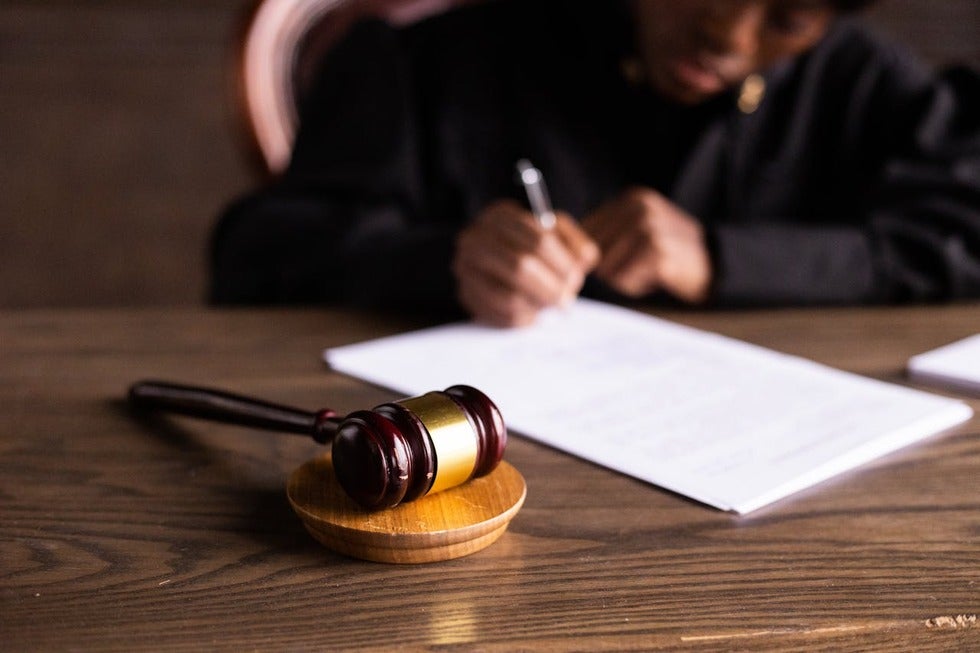
The hearing officer's mindset dominates the entire DMV DUI hearing process. Their role is not to spar with you, but to see whether the California DMV's conduct conforms with the facts and law regarding drunk driving charges. At each stage, they concentrate on the evidence, procedures, and policies directing automatic license suspensions.
Their Objective
The hearing officer's main objective is to determine if the DMV's action, such as a license suspension, was warranted. They examine whether the arresting officer had probable cause, if procedures (e.g., Title 17 of the California Code of Regulations) were adhered to, and if the DMV proved its case. That is, verifying whether you were arrested for DUI, your blood alcohol was at least .08%, or if you refused a chemical test. No prejudice. The hearing officer looks at both sides' evidence and makes a decision based on what's presented at the hearing.
Representing your case is about sticking to facts. If you can demonstrate that the chemical test was mishandled or the arresting officer bypassed protocol, you could have better odds. For instance, if the officer who administered your test didn't note the time or use clean equipment, emphasize that. The officer listens for these points, not histrionics.
Persuasive Arguments
To be heard, your arguments must conform to the hearing officer's mindset. Use data, not emotion. Bring proof if the BAC test might have been wrong: Was the testing device maintained? Did the officer advise you of your rights? If you have it, service records, technicians reports, bring it. Organize your arguments such that it's obvious how each argument connects back to the law and regulations.
Include information that could be a game changer, for example, health conditions that could impact testing outcomes. If they didn't give you proper notice of the suspension, display the paperwork or timeline. All these steps construct a portrait of your side which CAN SHIFT THE DECISION.
What They Disregard
Hearing officers don't care about heart-tugging stories or unrelated hardships. They adhere to hearing facts, not personal battles or things that don't relate to the evidence. For example, claiming that you require your license for your job is insufficient if the legal criteria are not satisfied. Don't: Rehash old unrelated traffic woes, they don't serve you and can actually undermine your case.
Focus on the evidence: Was the test fair? Was the notification explicit? Did the officer even have a reason to stop you? Tie each point back to the law and the facts.
Navigating The Hearing Process
A DMV DUI hearing in Alameda County is an administrative review that focuses on your driving privileges, separate from any criminal DUI case. Understanding the DMV hearing process, the participants, your rights, and the next steps will help you prepare and respond effectively.
Who Attends
Anticipate a DMV hearing officer, who acts as both judge and fact-finder, to conduct the DMV hearing process and render all final decisions. You could encounter the arresting officer, particularly if their testimony is crucial. Other witnesses, such as lab techs, may show up if the validity of chemical tests comes into question. You are permitted to bring your own witnesses, expert consultants, character references, whatever you think will help your DUI case.
Each participant has a role. The hearing officer hears, queries, and adjudicates based on the evidence presented. Law enforcement lays out what they did and what they saw, while witnesses clarify details such as test methods. You're entitled to confront their accounts, cross-examine, and share your side during the DUI hearing.
If they put a witness up against you, be ready to confront him. This can involve reviewing police reports or test results and bracing for what they could indicate. Having your paperwork organized and your questions prepared is essential for a successful outcome in your DMV DUI hearing.
You may bring a legal representative if you wish, although this is typically not necessary. Experienced DUI attorneys can identify mistakes, make objections, and articulate technical regulations, such as Title 17 violations, that could be crucial in winning your case.
Procedural Steps
This all starts when you request a hearing within 10 days of your arrest. If you miss it, your license will be automatically suspended after 30 days. Similar to a court proceeding, each side makes opening statements, then presents evidence and witness testimony.
Keep everything together, police report, chemical test results, and any DMV mail. You'll even be able to submit your own evidence, receipts, pictures, statements, to defend yourself.
Once all sides have been heard, you can give a closing argument describing your position. The hearing officer goes over it all and decides, typically within days or weeks. The decision could reinstate your driving privilege, affirm the suspension or reduce the penalty.
Your Legal Rights
You can bring evidence, argue against the officer's probable cause for the stop, or attack chemical tests. If law enforcement didn't meet title 17 standards, any tests could be tossed out which can be the difference in losing or keeping your license.
Be represented by Gorelick Law Office. You can appeal if it's against you. Ultimately, you can file an appeal, which will further delay the process and involves poring over the hearing transcript.
Next Steps
Anticipate every outcome in your DMV DUI hearing. Know your appeal options and act fast if additional steps are necessary.
Understanding The Outcome
A DMV DUI hearing in Alameda County typically leads to one of two outcomes: you either retain your driving privileges or confront an automatic license suspension. This DMV hearing process is separate from any criminal court proceedings and is overseen by a hearing officer instead of a judge. Understanding how this could impact your daily life and planning accordingly is essential, given the significant legal issues at stake.
-
License fully restored if you win, no DMV suspension.
-
License suspended if you lose. potential suffering for labor, education or relatives.
-
Immediate action required after the hearing, regardless of outcome.
-
Further legal steps available, including appeal or restricted license.
If the Case Is Decided In Your Favor
Winning is the DMV dismisses any action against your license. You retain your full driving privileges, no suspension. This result is to be appreciated, as it frees you to advance unencumbered. Still, it pays to see why you won, was it due to police report mistakes, chemical test issues or Title 17 violations? Take this opportunity to think and ensure you drive legally.
Even after a victory, speak with a DUI lawyer. Laws evolve quickly and just having a specialist in your corner can make a difference if you ever encounter another hearing.
In The Event Of An Unfavorable Outcome
|
Outcome |
Penalty/Consequence |
|
License Suspension |
Standard period varies by offense (min. 1 month) |
|
Restriction Option |
Possible work/school restricted license |
|
Reinstatement Steps |
Fees, proof of insurance, SR-22 requirement |
You lose the hearing, you lose your license for a while. The term is based on the conviction and prior convictions. The DMV will tell you when the suspension begins and what you need to do to get your license back. You can request an appeal or a limited license that allows you to drive to work/school.
Speaking with a DUI attorney immediately informs you of your rights and the available time for filing appeals.
The Appeal Option
If you believe a legal error was committed, you can appeal the DMV's decision. Appeals have to be about mistakes, like misapplied law or unfair process. File your appeal as soon as possible, typically within 15 days. A great lawyer will analyze your case, identify vulnerabilities, and help you craft a compelling argument.
It's a formal procedure. It could take weeks, or months, so be prepared and stay aware.

Final Remarks
Clear evidence, smart timing, and a strategic plan are the cornerstones of success at a DMV DUI hearing. The process is technical, emotions won't win the case, but preparation and legal guidance can.
Gorelick Law Office helps drivers across Alameda County fight back. We know how the DMV operates and how to uncover issues that can change outcomes.
Need help protecting your license? Contact Gorelick Law Office today and let us guide you through the process with experience, clarity, and confidence.
Frequently Asked Questions
1. What Is The 10-Day Rule For DMV Hearings?
You need to file for a DMV DUI hearing within 10 days of your arrest. Missing this deadline can cost you your hearing rights and result in an automatic license suspension.
2. What Happens During A DMV Hearing?
A DMV hearing officer evaluates evidence and listens to your account to decide if your driving privilege should face an automatic license suspension, making it less formal than a court hearing.
3. What Evidence Can Help Win A DMV Hearing?
Witnesses, video, or even police report errors can back you up in your DUI case. An experienced DUI attorney can help collect compelling evidence and present it effectively.
4. What Are The Possible Outcomes Of A DMV Hearing?
If you win your DMV dui hearing, you get to keep your driving privilege. If you lose, your license may face an automatic license suspension.
5. Do I Need An Attorney For A DMV Hearing?
You don't need an experienced DUI attorney for your DMV DUI hearing, but having one can help you win by constructing a compelling argument.
Let's Protect Your License - Act Now Before It's Too Late
If you've been arrested for DUI in Alameda County, the clock is already ticking. You only have 10 days to request your DMV hearing before automatic license suspension kicks in. Don't wait and hope for the best, secure your rights, protect your license, and prepare a strategy that works. At Gorelick Law Office, we focus on the facts, expose weaknesses in the DMV's case, and guide you step-by-step through the hearing process. With decades of experience and a proven record in DUI defense, we know what it takes to make your voice heard. Contact us now to schedule your consultation. The right help at the right time can make all the difference.

