
Key Takeaways
-
Judges in California scrutinize resisting arrest cases closely. They take into account the overall context, including the alleged actions of the defendant as well as law enforcement officers, to provide a fair evaluation.
-
Judicial discretion. Many key factors impact judges' decision-making. These are the defendant's intent, the nature of the resistance shown, and the existence of compelling evidence such as video evidence or independent bystander testimony.
-
Consider a defendant's criminal record in addition to mitigating personal factors, including mental health issues, in sentencing decisions. These consequences may include punitive fines and/or probation up to imprisonment, if charged as a misdemeanor or felony.
-
Knowing your rights and what to do during law enforcement encounters is more important than ever. Exercising your right to remain silent and your right to an attorney prevents you from self-incrimination.
-
Common defenses in resisting arrest cases involve challenging the legality of the arrest, demonstrating a lack of intent, asserting self-defense, and highlighting officer misconduct or insufficient prosecution evidence.
-
Recent movement in California law and changing judicial attitudes are making it less likely that resisting arrest will be successfully prosecuted. There is a much greater expectation of fairness, transparency, and protection of constitutional rights.
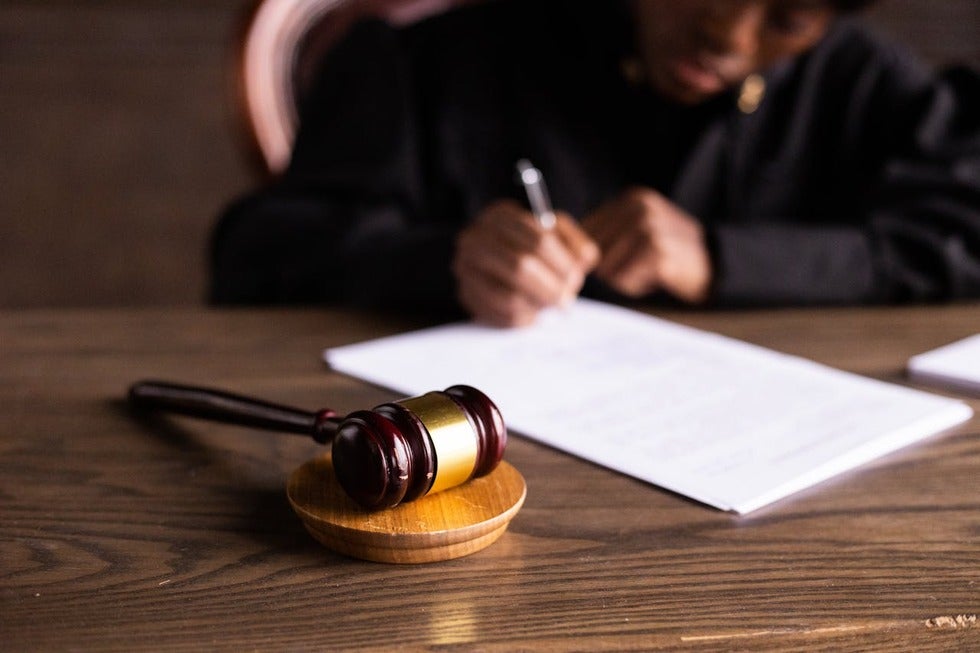
It's honestly a case-by-case basis, so judges look at the underlying facts, the individual circumstances. Judges do look at how police act/approach when charging someone with resisting arrest. Each case has its narrative, which is why judges are trained to look beyond the surface.
These courts review whether the police gave unambiguous commands. They determine whether the person used violence or whether there was a danger to public safety. Previous case law and the severity of the conduct play a role in determining the outcome.
Most judges want to do the right thing and follow the law as it was intended. They consider things such as the person being a first-time offender and if the person was injured.
In order to illustrate what goes on in real courtrooms, the first section below describes the experience at each stage of the process.
Judicial Approach to Resisting Cases
California judges do not handle resisting arrest cases with a cookie-cutter approach. Each case presents its unique set of facts, individual backgrounds, and legal issues. In these courtrooms, the judge takes an active role in investigating the case. They look at the facts of the arrest, determine the actions of each individual involved, and explain what the law requires.
California law more broadly requires that resisting arrest is always treated as a misdemeanor. This is because it is not treated with the same level of severity as a felony. It still carries serious risks, including up to one year in jail or a fine of up to $1,000. Judicial diversion is another option, allowing first-time or low-risk offenders to escape conviction altogether if they fulfill specified conditions. The judge certainly does not take all of this lightly. They act to prevent excesses, to keep the process fair, and to respect rights.
1. Key Deciding Factors for Judges
To start, when considering these cases, judges prioritize the specifics surrounding the accident. They ask: What exactly did the person do to resist? Was there a physical fight, a verbal protest, or simply a reluctance to comply? The degree and type of force are of paramount importance.
In some cases, the resistance is just a casual drive off home, while in other situations, it includes shoving or even tussling with the cop. Judges are equally concerned about how an arrest originated. Was the officer's indication known based on their actions? Did they do the necessary pre-arrest planning for a resistance case? Why do these questions, and all of the above, count? They serve the purpose of informing the judge whether the opposition was a knee-jerk reaction or more intentional.
It matters how each side conducts itself. If the officer's conduct was excessive or violated protocol, the judge will take that into account. For example, a claim of resisting out of concern for personal safety can change the judge's calculus. This fear poses a unique problem given that it results directly from the officer's conduct.
Judges look at the scene, including the location, time of day, and whether there were any bystanders who witnessed the incident. Value of this broader perspective This broader picture can prevent a one-size-fits-all approach from taking hold in the judiciary.
2. Assessing Defendant's Intent Critically
Intent is the elephant in the room. Judges are tasked with determining whether the individual intended to resist or if it was unintentional. For instance, someone who pulls their arm away when asked may be inadvertently or accidentally resisting. Judges don't have a stake in either side's case; they listen to both sides and look for proof.
Had the individual been given a warning by the officer? Were they given sufficient opportunity to comply? As in most criminal cases, intent is what divides the guilty from the not-guilty verdict. If it looks like the resistance was unintentional and not planned, a judge would likely find that the evidence presented is lacking for a conviction.
If the defendant attempted to resist arrest, even after being issued unambiguous orders, this demonstrates intent.
3. Evidence Impact on Rulings
Judges tip overwhelmingly in favor of strong evidence. Evidence captured on video, whether it's from a body camera or a bystander, can be the deciding factor. It captures literally what was told verbally, but also where folks were walking to, what the environment looked like at that time.
Witnesses are important too, particularly if they're independent third parties. Often, there is a clear discrepancy between what an officer claims happened in their report and what's captured on video. Especially in these cases, judges tend to defer to their eyeballs and earballs.
Medical reports, photographs of injuries, and even recordings from adjacent security cameras can bring additional dimensions. Taken together, all this enables the judge to best understand the facts at hand and rule in favor of what is right.
4. Prior Record: How It Sways
This is another powerful consideration. First-time offenders tend to receive greater mercy, such as eligibility for judicial diversion. In California, if a person successfully fulfills the terms of a diversion, like attending a counseling program or performing community service, the charge will be dropped.
This saves defendants from the burden of a criminal record. The terms of diversion typically require that they commit no further illegal acts during the diversion period, which may be up to two years long. If a person has a record of violent actions, judges are more likely to impose a tougher penalty.
Like future resisting arrest convictions, previous convictions for resisting arrest incur harsher punishments. Under the ordinance, repeat offenders are subject to increased jail time or greater fines. The purpose of the law is to prevent a similar misconduct from occurring in the future.
5. Mitigating Circumstances Role
Judges are interested not only in determining guilt but in finding reasons to show leniency. Often, a defendant's mental state or mental health concerns are involved. For instance, someone who has a diagnosed mental illness might be sentenced more leniently.
This could very well be true of someone who was experiencing a mental health crisis at the time. Factors such as youth, lack of criminal history, or evidence that the individual was provoked can further aid in this regard. Judges can use these facts to impose a lower sentence or grant diversion.
The hope is that the result will be aligned to the individual's actual needs.
6. Balancing Law and Case Facts
Judges should be constrained by the legal definition of resisting arrest. They do it while balancing the law against the facts of the case as they see them. The judges must ensure that all the elements of the crime are met.
For example, determining whether the officer was acting within their official duty, the defendant knew that, and the resistance was clear. Fairness, of course, is an important touchstone. They look beyond the charge in black and white.
7. Referencing Legal Precedents
Judges often rely heavily on past case rulings to guide their decisions. If a supreme or appellate court has addressed an analogous scenario, that opinion can certainly guide the resolution.
As an example, past decisions have established that even the slightest resistance, such as driving away, constitutes resistance. If those cases showed errors by police or unclear intent, judges can use that to justify a lighter sentence.
Precedent is one of the tools that judges have to maintain uniformity and predictability among cases.
8. Upholding Constitutional Rights
Protecting constitutional rights should be the guiding objective of each case. Judges see to it that the accused person has a fair trial. This involves the ability to access an attorney, the right to refuse to talk, and shelter from inappropriate police practices.
If the officer did indeed err, the judge might dismiss the case. This would be the case if the officer had excessive force or made an unlawful arrest. Under California law, regardless of whether the arrest itself was illegal or unconstitutional, you're not allowed to resist.
If the officer goes too far, members of the judiciary may be willing to intervene. They can reduce the amount of the fine or drop the charge entirely.
Common Defenses Against Charges
Charges of resisting arrest will usually receive a close eye from the courts. Judges will always be looking at more than just the surface-level facts. They are all told to consider the specifics of each case, and strong defenses make all the difference in the world.
An effective strategy will go a long way in challenging the prosecution's case, challenging the officer's conduct, or explaining the defendant's conduct. Here, I demystify the six most common defense tactics seen in these cases and discuss why they're important.
Challenging Arrest Legality
The most common defense is proving the arrest was illegal. If the officer lacked probable cause or used too much force, the defense can argue that the arrest itself broke the rules. If an officer cannot articulate a legal reason for stopping someone, this can give rise to constitutional issues.
Then any force exerted in that scenario can be considered unreasonable. Courts usually look to see if the officer acted legally at each stage. If the arrest is determined to be illegal, the case can't hold up, and any evidence obtained as a result can be excluded.
Proving Lack of Willfulness
Judges further entertain defenses that the defendant lacked the willfulness to resist. Under the law, the government must prove that the individual acted willfully. Often, folks aren't being resistant — fear, confusion, or a lack of understanding motivates behaviors that are perceived as pushback.
If an individual is responding to panic or poor instructions, the defense can assert these responses were not willful. If the court finds in your favor, this can result in the dismissal of charges.
Self-Defense: When Applicable
Self-defense may be applicable if the officer used excessive force or if the officer effected an unlawful arrest. The standard is strict: the accused must show clear proof of threat or harm.
So for example, say you're injured by a police officer in a false arrest. If that person then pushes the officer away to defend themselves from harm, they are acting in self-defense.
Officer Misconduct as Defense
Allegations of police officer misconduct are a defense attorney's best friend. This can involve excessive use of force, falsifying reports, or failure to comply with procedures.
When these claims are made, they are given great weight by courts, particularly if there is evidence such as video, witness statements, or medical records.
Insufficient Prosecution Evidence
The burden is on the prosecution to prove that the resistance was intentional and obvious. When prosecution evidence is lacking or ambiguous, the defense may move for dismissal.
Where the burden lies. The burden is on the state to prove each element, and plenty of weak cases fail.
Your Rights During Encounters
Knowing your rights in police encounters is not just a legal safeguard but a practical tool for avoiding missteps that could later work against you in court. Whether you live in California or just visiting, it's important to know your rights. It empowers you to make the best decisions, particularly during encounters that could lead to accusations of resisting arrest.
This section explains each step, what you should do, and how your choices can affect what happens legally.
Understanding Your Right to Silence
Your right to remain silent is one of our most basic rights. In any police encounter, you do not have to answer questions about your actions, whereabouts, or even your name, except in some limited circumstances. So if you tell them, “I wish to invoke my right to remain silent,” police must stop asking questions.
Exercising this right prevents you from self-incrimination, so anything you say cannot be used to develop a case against you. Or if they provide a nervous explanation for what they are doing, that can be taken out of context or played back in court against them. Exercising your right to remain silent minimizes miscommunication and helps ensure a transparent process.
Interacting with Law Enforcement
Keeping your cool and being polite can go a long way. Generally speaking, officers are more likely to respond positively to a calm tone and body language. Communicate verbally, don't make sudden movements, and do not reach for anything without telling the officer.
If you are in a situation where you feel safe enough to do so, you can inquire, “Am I free to leave?” This establishes limits and informs the officer that you're cognizant of your rights. If you are a non-citizen, you should ask to see your immigration papers. Not only that, you need to know why you're being detained.
Maintain a safe distance, and be conscious of what's around you. That wa,y everyone, including you and the officers, is protected.
If Officers Stop Your Car
If officers stop your car, do not get out of the vehicle unless ordered to do so. Roll down your window just enough to communicate. Do provide your license and registration upon request, but you are not required to consent to any search if officers do not have probable cause or another legal justification.
Be respectful and make your intentions clear. This avoids miscommunication and ensures the safety of all involved.
What To Do If Arrested
If you do get arrested, calmly and say that you wish to have a lawyer. Do not provide information in response to interrogatories. If you're charged with a crime and can't afford an attorney, you have the right to have one appointed.
For non-citizens, it is important to ask about immigration consequences immediately because an arrest can damage your status. Remember, exercising your right to remain silent and request an attorney is the best way to safeguard your rights.
Navigating California's Legal System
Resisting arrest cases in California introduce another layer of regulations and procedures that dictate how judges handle each case. The state's laws and regulations are very complicated, with rigid deadlines and elaborate processes. For defendants charged with crimes, understanding these steps is critical.
Consider this — a defendant found guilty of a felony is entitled to appeal their conviction, but only within 30 days. Judicial officers, who are elected to six-year terms, are bound by strict procedures, and one missed deadline can seal the doors to any hope of relief. Choosing whether to file a writ or an appeal is not an easy choice.
A writ of habeas corpus is used to challenge the lawfulness of one's detention. It needs to be filed within 30 days for a misdemeanor or 60 days for a felony.
Why Hire a Defense Lawyer?
Experience and expertise are crucial when it comes to resisting arrest charges. A qualified defense lawyer is an absolute must. Attorneys understand the court's procedures, assist in managing timelines, and present the strongest possible argument on their client's behalf.
They identify legal flaws, like violations of due process by law enforcement or the judicial system, and fight for necessary appeals. An experienced defense attorney will be able to identify right away whether a suppression motion was improperly denied.
They can help apprise the client of the slim opportunity to challenge a guilty plea in a misdemeanor matter.
Exploring Judicial Diversion Options
Judicial diversion provides certain qualifying defendants an opportunity to avoid a criminal record. Not all resisting arrest charges qualify, but for those who do, meeting program rules—like counseling or classes—can lead to dismissed charges.
Judges consider many factors, including the defendant's record and the specifics of the case at hand, when deciding whether to grant diversion.
Plea Bargains: Pros and Cons
Plea bargains have become a central feature of these prosecutions. They can reduce time spent in court and provide less severe punishments, but have a lasting impact on an individual's record.
By accepting a plea, the door to appealing at a later date can be shut. This is a huge factor to consider when balancing future work or trips.
Preparing Your Defense Strategy
All of these defenses require a thorough investigation, including a collection of facts, witness accounts, and police reports. The sooner the better, the better the case.
Your evidence needs to be compelling, and your deadlines strictly adhered to to ensure that you have all avenues available.
Recent Shifts in Resisting Cases
In recent years, there have been several shifts that have occurred in how courts in California interpret resisting arrest. Taken together, these moves show the impact of new legislation, altering attitudes in courtrooms, and changes in police department regulations. Each of these is a significant improvement for defendants charged with resisting, for police officers, and for society at large.
New Laws Shaping Outcomes
California has enacted more explicit standards for what constitutes resisting arrest. Other recent regulations state that not providing your name to police officers is no longer an offense. Other policy changes are a step toward discouraging officers from using force except as a last resort.
These laws aim to reduce the chance that peaceful protest activity will result in severe criminal charges. For those facing charges in court, these reforms provide a level playing field to present their case. This is particularly so for those who did not pose a threat to anyone.
For the police, the regulations provide additional burdens they need to adhere to, as well as less room for error. Despite these positive changes, the law still maintains resisting arrest as a misdemeanor. It subjects you to up to one year in jail and exorbitant fines. This impacts no one's life more than in a positive way.
Evolving Judicial Perspectives
Today, judges are increasingly aware that their rulings don't exist in a vacuum—they reflect broader societal shifts and ongoing concerns about racial justice. Courts recognize that Black neighborhoods often face heavier police presence and that encounters there can carry greater risks of violence.
This awareness has been sharpened by high-profile incidents involving police use of force against unarmed individuals. For example, in 2010, the Los Angeles County Sheriff's Department was involved in multiple shootings where several people were wounded despite being unarmed—a stark reminder of the dangers some communities face in law enforcement encounters.
Such cases push courts to carefully weigh the context of arrests and use of force, acknowledging systemic inequalities while balancing public safety and legal standards.
These recent court decisions indicate that judges are beginning to question the police's actions and demand explanations for why they did what they did. It's hard to believe, but officers often avoid accountability even when there is substantial evidence of wrongdoing. This sad reality leaves many rightfully skeptical about true accountability.
Policy Changes: Real Impact
Resisting Arrest Cases — New Direction Police agencies have implemented enhanced training and developed clearer guidelines to minimize harm when making arrests. Some have even adopted new training that encourages officers to communicate more and use force less.
By implementing these rules and procedures, the goal is to restore community trust and decrease the likelihood of violent confrontations. Yet even as the jail faces reports of violence and abuse, issues that indicate much deeper problems, community members are making strides.
The effects for those arrested can last for years. This creates hardship in obtaining employment and the basic ability to feel safe moving around their own city.
Conclusion
Judges in California are rightly hesitant to uphold these kinds of resisting arrest convictions. They examine every detail, consider the narrative from all angles, and adhere to the law relentlessly. Better records, truthful statements, and compelling evidence will always be able to influence the outcome. Minor offenses or ambiguous use of force will receive softer demands, but when there is a legitimate danger or violence there is a strict response. No one should feel hopeless in court, but understanding your rights and the options available to you will go a long way. A competent defense attorney will be able to identify vulnerabilities in the prosecution's case, such as lack of a clear command or failure to establish use of force. As judicial sentiment evolves, including among judicial actors who previously tended to defer to the police, results can change quickly. For defendants, rigorous preparation and strategic decision-making are key to getting the best possible result. For further advice on preparing for court or alternative defenses, visit my blog.

Frequently Asked Questions
How do judges in California typically decide resisting arrest cases?
Judges tend to look at the facts, intent and actions of the accused. They have to consider all the evidence submitted from both the defense and prosecution side and apply California law. Every case is different and results differ from case to case.
What penalties might someone face for resisting arrest in California?
For a misdemeanor, penalties typically involve fines, probation, or incarceration. The act can be charged as a felony or misdemeanor, with the degree determined by the situation and whether there were injuries or previous convictions.
What are common defenses against resisting arrest charges?
Defendants might argue they were acting in self-defense, had no intent to resist or the arrest itself was illegal. Experienced legal counsel can ensure that these defenses are compellingly presented.
What rights do individuals have during police encounters in California?
Anyone approached by police has the right to refuse to answer questions and to seek an attorney. People should not physically resist arrest and should seek clarification when uncertain about police conduct.
Can resisting arrest charges be reduced or dropped?
Can resisting arrest charges be reduced or dropped. This is usually the case when the evidence is weak, or the defendant has no criminal history.
How has California's approach to resisting arrest cases changed recently?
These changes, including SB 1421/AB 748, aim to increase police accountability and transparency around the use of force. Other courts are more deferential in their scrutiny of police misconduct while making arrests.
Why is it important to have legal help in resisting arrest cases?
An experienced attorney knows the law and the court process. Having legal assistance can make all the difference in achieving a positive outcome and ensuring your rights are safeguarded during the entire legal process.
Arrested? Accused of Resisting? Don't Let Fear Decide Your Future.
In the heat of the moment, things can escalate fast. A confusing encounter with law enforcement can suddenly turn into a charge for resisting arrest—and now you're facing a criminal accusation that could change your life.
Here's the truth: you're not alone, and you're not powerless.
At Gorelick Law Office, we know how overwhelming it feels to be up against the justice system. But we also know this—every story has two sides, and you deserve to have yours heard. Whether it was a misunderstanding, miscommunication, or a moment of panic, you still have rights—and we're here to protect them.
Our California-based legal team doesn't just handle resisting arrest cases—we live for the fight. We understand the local courts, the pressure you're under, and the path toward clearing your name. We build defenses that are tough, tactical, and unshakable.
Don't let fear or confusion dictate your next move. Let Gorelick Law Office stand by your side and fight for your freedom. Your free consultation is just a click away.
One charge doesn't define you. Let's take back control—together.
Disclaimer
The materials available on this website are for informational and entertainment purposes only and not to provide legal advice. You should contact your attorney to obtain advice concerning any particular issue or problem. You should not act or refrain from acting based on any content included in this site without seeking legal or other professional advice. The information presented on this website may reflect only some current legal developments. No action should be taken based on the information on this website. We disclaim all liability concerning actions taken or not taken based on any or all of the contents of this site to the fullest extent permitted by law.

