
Key Takeaways
-
You have the legal right to refuse field sobriety tests (FSTs) in California, but doing so can result in immediate administrative penalties such as license suspension, and does not prevent other forms of testing.
-
Refusing FSTs can be viewed by law enforcement as a sign of impairment, which can affect their decision to arrest you and be presented in court as evidence.
-
FSTs and chemical tests are very different things. Usually, refusing chemical test results in more severe consequences than refusing FSTs.
-
The accuracy of FSTs is frequently undermined by a combination of subjective officer discretion, environmental conditions, and personal physical conditions, all of which may influence your execution and the test result.
-
It is a strategic refusal of FSTs in some cases, as this can restrict the evidence against you.
-
Staying calm, respectful, and knowing your rights at a DUI stop can impact the result and help protect your rights during the process.
State law doesn't compel you to submit to these tests during a traffic stop, and cops can't penalize you simply for refusing. Field sobriety tests search for indications of impairment, yet they frequently depend on the officer's observation and are prone to errors. Most people don't realize these tests are not the same as breath or blood tests, which have different rules. If you get pulled over, knowing your rights can help you make wise decisions and prevent trouble down the road. In the following section, you'll discover how refusing a field sobriety test might impact your case and what to do next.
Your Right To Refuse FSTs
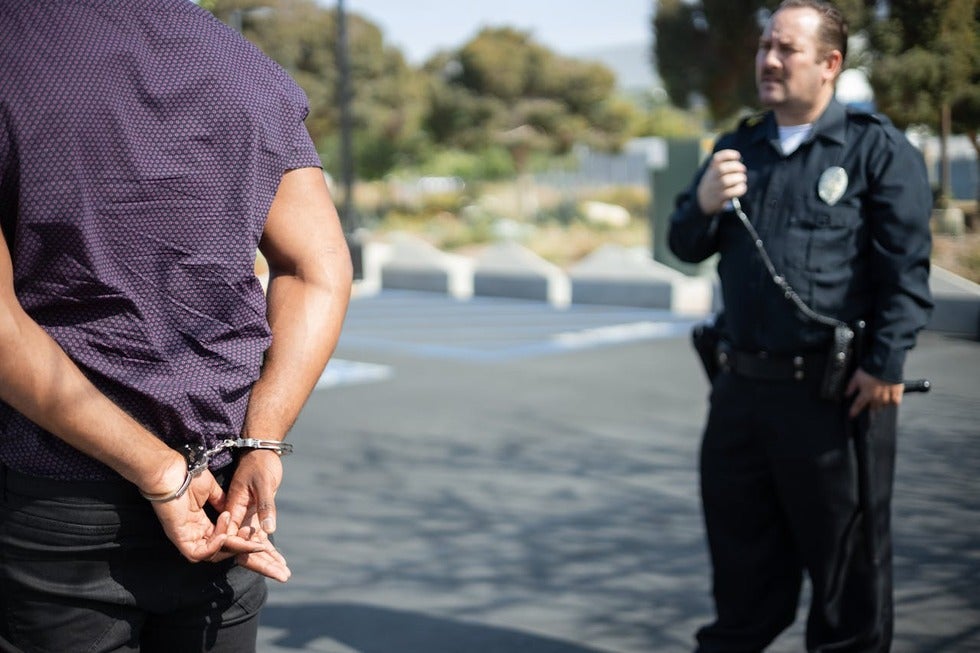
You can decline field sobriety tests (FSTs) in California. These tests are voluntary for most drivers and not legally required. Refusal alone does not lead to criminal charges. Still, it can generate other problems. Being aware of your rights and potential consequences is essential if you are pulled over for suspected driving under the influence (DUI). Refusing an FST can result in administrative sanctions and impact an officer or court's perception of your case. Knowing the distinctions between FSTs and chemical tests and how unique standards operate for those under age or on probationary licenses is crucial in helping you make an educated decision.
1. The Legal "Yes."
California law makes it clear that you are not legally obligated to take FSTs. You can refuse without a direct criminal or administrative penalty just for saying no. The implied consent law in California only applies to chemical tests—breath, blood, or urine—taken after an arrest. This means FSTs, which check balance, coordination, and cognitive skills, are not covered by that law. Still, your refusal is not without consequence. If you say no, that fact can be brought up in court. It may be used as evidence that you were trying to hide an impairment. Refusal can be a factor in the officer's decision to arrest you or take further steps. While the legal right is clear, the practical effect is more complex.
2. The Practical "But."
If you say no to an FST, you might escape providing the officer with physical evidence of impairment. Refusing can make law enforcement more suspicious. Officers will interpret refusal as a sign of guilt. This typically results in further probing, additional questions, or even an arrest on the spot. You may find yourself fixated on your actions, your look, your words. It may mean law enforcement leaning more on chemical tests, which are harder to fight. Refusal doesn't halt other testing. The actual consequences of refusal vary by officer and circumstance. Occasionally, declining an FST might benefit your situation, but it may complicate matters in court.
Immediate penalties for refusal include:
-
More dependence on chemical tests and officer observations.
-
Increased scrutiny by law enforcement.
-
Your refusal to be introduced in court as part of the officer's basis for the decision.
-
Possible 1-year license suspension.
-
Enhanced penalties upon conviction.
3. FSTs VS. Chemical Tests
FSTs and chemical tests play different roles in DUI stops. FSTs test physical skills, like the Walk-and-Turn or the One-Leg Stand. Officers deploy them to detect impairment indicators at the roadside. Chemical tests measure blood alcohol content, which includes breath, blood, or urine tests. If you refuse a chemical test after arrest, you receive a refusal enhancement. This means harsher penalties, not just for refusing the FSTs. Although both types of tests can be used in court to demonstrate impairment, each has its own legal regulations and hazards.
4. Under 21 And Probation
If you're under 21 or on DUI probation, the regulations are tighter. Underage drivers have zero-tolerance laws. Refusing any test, including FSTs, can result in an automatic license suspension. Probationary drivers must submit to all requested sobriety tests under the terms of their probation. For probationers, refusal can translate to additional punishments in court. The impact is harsher and more persistent for young or probationary drivers, so understanding your rights is even more important.
What Are Field Sobriety Tests?
Field sobriety tests (FSTs) are tools used by law enforcement to check if a driver is under the influence of alcohol or drugs. These tests consist of physical and mental exercises. The officer will watch how you move and if you can follow simple tasks. Some of the most common tests are the walk-and-turn and the one-leg stand. These measures look at how well you balance, listen, and do more than one thing at a time. FSTs are not perfect, though. They can be affected by nerves, health, or even the shoes you wear. You should know FSTs are not required in California unless you are under 21 or on DUI probation. If you refuse, you could face a one-year license suspension and steeper court penalties.
Standardized Tests
Standardized field sobriety tests are endorsed by the National Highway Traffic Safety Administration (NHTSA). These tests are standardized across the board, so officers use them to screen everyone the same way. This helps courts believe the results more. The three main standardized FSTs are:
-
Horizontal Gaze Nystagmus (HGN): The officer moves a pen or light in front of your eyes. You have to track the object as it goes laterally. The officer checks for nystagmus or jerky eye movement, which is an indicator of intoxication.
-
Walk-and-Turn Test: You walk a straight line, heel-to-toe, for nine steps. Then you pivot on one foot and return. You have to maintain your balance and hear instructions.
-
One-Leg Stand Test: You stand on one leg and count out loud for about 30 seconds. The officer observes if you sway, hop, or plant your foot.
Courts tend to prefer these standardized tests over others because they're regimented. Even these tests are not 100% accurate. Research indicates they're accurate roughly 79% to 88% of the time.
Non-Standardized Tests
Non-standardized tests are not equal everywhere. They might have you count fingers, recite the alphabet, or perform the Romberg balance test, where you stand still, close your eyes, and estimate 30 seconds.
There are no established rules for these tests. Every cop could be utilizing an alternate system, and their scoring of your performance may differ as well. As such, it is more difficult to demonstrate that these actually work. Sometimes, the manner in which an officer administers the test or scores it can impact the results significantly.
You can take non-standardized test results to court. Because they lack the same science behind standardized FSTs, judges and juries may be less likely to trust them.
The Subjective Nature
Officers' evaluation of FSTs is subjective. Your test results depend a lot on what the officer sees and thinks. If you are tired, anxious, or if it is cold outside, you might not do well even if you are sober.
Other people have medical conditions or injuries that can make these tests difficult. Even trivial things like traffic noise or bad lighting can affect your performance. Officers may view identical behavior differently. Thus, two individuals might receive disparate outcomes for identical errors.
Subjective decisions lead to unfair outcomes. If you're dealing with a DUI, your attorney must demonstrate how extrinsic elements influenced your examination. This might assist your defense in court.
The Aftermath Of Refusing
There is a unique collection of consequences, both direct and indirect, that accompany refusing FSTs in California. Your refusal to take these tests doesn't have immediate criminal consequences, but it does influence how your case plays out, beginning with the roadside encounter and ending in the courtroom and at administrative hearings. Your refusal is not a quiet act; it sets off a chain reaction with law enforcement, the DMV, and the courts.
Officer's Perspective
Refusing FSTs almost invariably causes the officer to conclude you're concealing impairment or at least guilty. They're trained to look for signs of intoxication, so your refusal can carry a lot of weight in their on-the-spot analysis. With no test results at hand, officers can instead look more closely at your behavior — how you talk, stand, or comply with basic commands.
Officers use their training to read your refusal. If you're nice and respectful, they might remember that you cooperated, but flailing or defensive behavior tends to confirm their suspicions. Your refusal might spur the officer to arrest you based on their observations alone, especially if your driving was even a little bit suspect. This means your behavior, your language, and your physicality at the stop are what really help shape the officer's report.
Probable Cause
Your refusal to take FSTs can become a stepping stone for the officer to assert probable cause for a DUI arrest. They do not need the results of these tests to arrest you; they have other evidence.
-
Driving inconsistently, such as swerving or varying speed.
-
Noting physical signs like slurred speech or bloodshot eyes.
-
Documenting the smell of alcohol or other telling factors.
-
Recording your refusal itself is a suspicious act.
They need probable cause to arrest, and refusing FSTs gives them one more reason to proceed, especially when combined with other observations.
Courtroom Impact
The legal repercussions are complex. By refusing, you deprive the prosecution of evidence they could have used, such as a failed WAT or OLS, which can be subjective and difficult to rebut. This can constrain their argument. Lacking such records might hurt the prosecution's case because they can't use your physical performance as evidence.
Prosecutors can and often do assert that your refusal is an indication of guilt or that you're trying to cover up your condition. They can use it as an argument to the jury, and under the law of California, they may consider refusal as an indication of consciousness of guilt. The court can consider your refusal in combination with other facts, like your chemical test results or officer testimony. If your case goes to trial, your defense needs to cover these perceptions, and your refusal could impact plea deals, negotiations, and even the outcome.
Administrative sanctions factor in. Refusing FSTs alone won't cause criminal penalties to be initiated, but the DMV can suspend a license, usually on a one-year basis. This stretch can be lengthened with previous infractions. If you refuse a post-arrest chemical test, you're hit with a “refusal enhancement” that increases your penalties under California law.
Why FSTs Are Flawed
Field sobriety tests – or FSTs – are one of the most common tools police use to test for impaired drivers. These tests have a number of defects that render their results dubious and contestable. You need to hear about these pitfalls, particularly if you are invited to take an FST in California or anywhere else. There are many environmental, personal, and procedural variables that impact how these tests function in practice.
|
Common Flaws in FSTs |
How They Affect Reliability |
|
Subjective officer interpretation |
Can introduce personal bias or error |
|
Poor correlation with actual impairment |
Results may not reflect the true ability to drive |
|
Environmental distractions |
Make fair testing difficult |
|
Physical and mental health factors |
Cause false positives unrelated to intoxication |
|
Improper test administration |
Leads to invalid or misleading results |
|
Limited accuracy, even when standardized |
Not 100% reliable, e.g., HGN is only 88% accurate |
|
Ignoring individual limitations |
Fails to account for age, disability, or injury |
Environmental Factors
The weather has a big part to play. Rain, wind, or cold can turn even the simplest of things into a challenge. You may slip, shiver, or lose focus, all of which drag your performance down. Several FSTs require you to walk heel-to-toe or stand on one leg. Doing this on a wet or sloped road is unfair and causes errors that have nothing to do with drugs or alcohol.
Roads count. If the surface is uneven or loose gravel, it's hard to maintain your equilibrium. Distractions like cars driving by, loud sounds, or even flashers from a cop car can impact your performance. Bad lighting is an issue. If it's too dark or the headlights are glaring, you may not see the line you're supposed to stay on.
These factors cause your test results to be biased. If you find yourself in this scenario, keep in mind that these are legitimate grounds to question the findings. In court, highlighting these flaws can assist in impeaching the FST's reliability.
Personal Conditions
Medical issues such as joint pain, balance disorders, or neurological problems might make it difficult to complete FSTs. Even if you're stone cold sober, these things will make you trip up or screw up sections of the test. Senior citizens or disabled individuals are particularly vulnerable to such mischaracterizations.
The stress and anxiety during a traffic stop can easily cause you to lose focus and make errors in following instructions. When you're nervous, your hands might shake, or you might forget steps. It's not an indicator of dysfunction, but it can appear to be.
Certain drugs produce sleepiness, hallucinations, or poor coordination. Health problems like sleep deprivation can do the same. These personal factors aren't taken into account by standard FSTs, but they can be vital for your defense should results be contested in court.
Officer Error
Officers are imperfect when administering or evaluating FSTs. If an officer describes the test badly or jumps around, you can flub your performance. Elementary oversights, such as forgetting to screen for medical conditions or ignoring the test script, can taint outcomes.
A lot of the FST process depends on an officer's opinion. If the officer is fatigued or distracted, or if they exhibit bias, their reading can be inaccurate. Even the standard tests aren't perfect. HGN, for instance, is 88% accurate at best.
Cataloging these mistakes is essential. If you can demonstrate that the officer was out of procedure or that their view was biased by something, this can be a great defense in court.
The Strategic Refusal
Refusing a field sobriety test in CA is not something to take lightly. This choice informs what officers can compile for evidence, affects your defense in court, and determines your relationship with the police. Knowing the hazards and advantages of refusal is key to safeguarding your rights and dictating the course of a DUI stop.
Limiting Evidence
If you refuse an FST, you can block police from collecting physical evidence of impairment. These exams, like walking a straight line or tracking a pen with your pupils, are subjective and faulty. Officers and prosecutors often depend on these results to back up DUI charges. By refusing, you can tie their hands, making it more difficult for them to prove impairment in court.
Downplaying the test results keeps your attorney able to argue there's a reasonable doubt. Without FST proof, prosecutors have to rely on other observations, like your speech, eyes, or driving. They depend more on chemical test results, such as blood or breath tests. For some, particularly those assured about a chemical test, rejecting FSTs might be a clever strategy.
At a minimum, a strategic refusal stops the gathering of deceptive or unbalanced evidence. Refusal in and of itself doesn't mean that charges will be dropped or not filed. If you're under 21 or on DUI probation, you can't refuse FSTs, and doing so comes with additional sanctions.
Checklist for Limiting Evidence by Refusing FSTs:
-
Politely state your refusal to do FSTs when asked.
-
Don't argue or say that it could be used against you.
-
Remain calm and respectful throughout the encounter.
-
Expect officers to fall back on other evidence, such as chemical tests.
-
Remember that this refusal can be used in court, but it is not a crime.
Protecting Your Rights
You defend your rights by understanding when and how to deny an FST. Make your point. Clear, concise language, like “I refuse to take field sobriety tests,” respectfully, can help make sure your refusal is recorded without conflict.
Clear communication is important. Police need to comprehend your refusal, and you can't engender confusion or mixed messages. This minimizes the potential for illegal search or seizure.
When you assert your rights, you level the playing field in a DUI stop. Officers must still reasonably justify their actions and obtain evidence lawfully. This helps you make strategic decisions that put your interests first during an investigation.
When To Comply
Other times, compliance can be to your advantage. If you think you will do well on the FSTs, maybe you aren't impaired or have a medical reason to back up any physicality. Cooperation can help prevent additional suspicion.
Cooperating with law enforcement can defuse tension and minimize escalation. Officers might interpret such courteous compliance as evidence that you have something to hide. In others, your measured, courteous demeanor will affect the way the officer chooses to handle your matter.
Your attitude makes a difference. If you acquiesce, communicate with steady clarity. If you say no, be gracious and nonconfrontational.
Navigating The DUI Stop
Think of a DUI stop as a controlled procedure during which officers determine whether the driver is under the influence. You need to know what comes next, what your rights are, and how your actions can influence the result. FSTs are voluntary for most California drivers, though refusing them can color the police and courts' perception of your case. What you do and say and how you behave can tip the scale in the officers' decisions and can have repercussions at trial. Calm, respect, and invoking your rights are your best weapons for guiding the stop with conviction and control.
Remain Calm
Remaining calm during a DUI stop is not merely a matter of steady nerves. It means you keep a clear mind and behave in a manner that assists, not damages, your predicament. Slow breathing or counting to ten before responding can help ease tension. When your voice is steady and your answers are straightforward, you demonstrate to the officer that you are rational and in control.
Officers are trained to pick up agitation or nervousness. If you fidget, talk too fast, or make nervous movements, they could interpret that as being under the influence. Sometimes it's just nerves, but the law isn't always that forgiving.
Concise speech and brief responses minimize the chance of being misrepresented. If a question baffles you, request a rephrasing. Keeping calm prevents you from doing things that make the stop more difficult for you.
Be Respectful
It never hurts to be polite to the officer. Small gestures, listening, not interrupting, and please and thank you will help the stop go smoothly. That doesn't mean you have to go along with everything. It means you demonstrate fundamental respect.
Your respectful behavior can bring the tension level down. In my experience, officers often respond more positively to calm, polite drivers. Polite responses, such as "yes, sir" and "no, sir," show you know the drill and that you will cooperate within your rights.
If you're respectful, the officer may recall you were respectful, which goes a long way if your case ever comes before a judge. It may not alter the result, but it seldom damages your position.
Invoke Your Rights
In California, there is no need to submit to field sobriety tests. These tests, such as the Horizontal Gaze Nystagmus, Walk-and-Turn, or One-Leg Stand, are designed to determine if you are intoxicated. You can say, in a clear voice, ‘I'd like to refuse the field sobriety tests.' That's your prerogative.
Knowing your rights makes it less likely you'll do something stupid that they can use against you. Don't argue or yell when you refuse. Coolly provide your answer and wait. They might be nice to you. They might try to talk you into agreeing, but you can say no.
Whether you refuse an FST or not, you're not coming out of this with a free pass. It can be raised as evidence, together with other indicia of intoxication. When you're arrested, you have to take a chemical test, either breath or blood, by implied consent law.
Conclusion
You're aware that the law affords you the option of declining field sobriety tests in California. Cops use these tests, but they screw them up, and the tests are off target. There are no criminal sanctions for saying no, though there may be some pressure on the street. You can refuse for reasons like nerves, health, or simply not trusting the tests. Knowing your right to refuse puts you in a strong spot. If you want to know more, speak with an attorney experienced in this area. Stay vigilant, believe your instincts, and protect your rights. Have questions or want to share your story? Sign up to comment and to help others learn as well.
Frequently Asked Questions
1. Can You Legally Refuse Field Sobriety Tests In California?
Yes, you can decline field sobriety tests in California. These tests are voluntary, and you are under no legal obligation to submit to them during a DUI stop.
2. What Happens If You Refuse Field Sobriety Tests?
If you refuse field sobriety tests, police can still arrest you if they have other evidence of impairment. Refusing these tests cannot be used as evidence of guilt in court.
3. Are There Penalties For Refusing Field Sobriety Tests?
No, there are no penalties for refusing field sobriety tests in California. This differs from refusing a chemical breath or blood test, which does have penalties.
4. Do Officers Have To Tell You That Field Sobriety Tests Are Voluntary?
Law enforcement officers aren't obligated to tell you that field sobriety tests are voluntary. Be prepared, know your rights, and politely inquire if you are required to take the tests.
5. Can Refusing Field Sobriety Tests Help Your DUI Case?
Refusing field sobriety tests at least restricts the court's evidence against you. Absent test results, it can be more difficult for prosecutors to prove impairment.
6. Are Field Sobriety Tests Accurate?
Field sobriety tests are not foolproof. Many things, like nerves or health issues, could impact your performance, resulting in unreliable outcomes.
7. Should You Refuse Field Sobriety Tests During A DUI Stop?
You can say no. Most lawyers say to just say no; these tests are subjective and can be used against you. Just be polite and assert your rights.
------------------------------------
Protect Your Future: Your Rights Matter After A DUI Arrest
A DUI arrest can turn your life upside down. Your license, your record, and your future are all on the line, and every decision you make from this moment forward matters. The legal system moves fast in these cases, and without the right defense, you risk serious penalties that can follow you for years.
At Gorelick Law, we understand how overwhelming this situation feels. Our team has spent decades defending people facing DUI charges and guiding clients through the confusion of DMV hearings, court deadlines, testing issues, and rights violations. We focus on protecting your freedom, challenging the evidence, and making sure law enforcement plays by the rules.
You don't have to navigate this alone. Visit Gorelick Law to learn how we can safeguard your rights and build a strong defense from day one. Call for a free consultation and get a dedicated advocate in your corner. Your future is worth protecting, and we're ready to fight for you.
Disclaimer
The materials available on this website are for informational and entertainment purposes only and are not intended to provide legal advice. You should contact your attorney for advice concerning any particular issue or problem. You should not act or refrain from acting based on any content included in this site without seeking legal or other professional advice. The information presented on this website may reflect only some current legal developments. No action should be taken based on the information on this website. We disclaim all liability concerning actions taken or not taken based on any or all of the contents of this site to the fullest extent permitted by law.


