
Key Takeaways
-
During a DUI stop, you must give the police your full name, a valid driver's license, vehicle registration, and insurance information. Having these papers handy and current may assist you in cooperating effectively.
-
You have the right to remain silent and can politely refuse to answer questions that may incriminate you, as this right protects you.
-
Police have to have probable cause to search your car, and you can decline searches that do not have a warrant or your consent.
-
Field sobriety tests are voluntary, but refusal can have legal consequences. Roadside preliminary breath tests can be rejected, though that can lead to consequences.
-
If you are arrested, you need to hear your Miranda rights before any questioning. Knowing what they are enables you to shield yourself during the process.
-
If you remain calm, respectful, and cognizant of your demeanor, the stop can go in your favor. If you record the encounter, where it is legal to do so, you will have footage to fight any potential charges.
California police can ask for your driver's license, car registration, and proof of insurance during a DUI stop. Cops can ask some pretty simple questions, like where you've been, if you've had anything to drink, and if you know why they pulled you over. You can give short answers or refuse to answer some questions. They may request that you get out of the vehicle or perform some field sobriety tests. You can decide if you want to do these tests, but once they arrest you, refusing a breath or blood test can have legal impacts. Knowing what the police can ask helps you protect your rights and make smart decisions at a DUI stop.
What Police Can Legally Ask
Police are granted sweeping, but not unbounded, powers to ask questions and demand specific papers during a DUI investigation. This information helps verify who you are, that you're legally allowed to be on the road, and if you might be impaired, especially in the context of California DUI laws.
-
Your full name, driver's license, registration, and proof of insurance.
-
Your current location and intended destination
-
Whether you have consumed alcohol or taken any drugs
-
Answers to idly asked questions, for example, “Where are you coming from?”
-
Consent to field sobriety or PAS tests, refusal rights under specific circumstances.
1. Identifying Information
At the very least, you must state your full name out loud to the officer in response to his inquiry during a dui investigation. Police need this to correctly identify you and to initiate a lawful stop. Be sure to provide your driver's license promptly and ensure it is valid; expired IDs can lead to further questioning. If you refuse to give your ID, it can escalate the stop, potentially leading to a DUI arrest for failing to obey lawful orders.
2. Vehicle Documents
The officer will typically request your vehicle registration and proof of insurance during a DUI investigation. To avoid complications, have these documents ready in an easy-to-reach spot in your car. Ensuring that all your paperwork is current is essential, as expired registration or insurance can lead to fines or even impoundment. Not providing your registration or insurance can result in serious trouble, so always carry it when driving to comply with California DUI laws.
3. Your Whereabouts
Officers will frequently inquire about your location and destination during a dui investigation. By clearly explaining your whereabouts and itinerary, you can help officers understand your actions and potentially avoid suspicion. If your responses are vague or evasive, be prepared for follow-up questions as law enforcement seeks to clarify your circumstances. Being upfront can significantly impact the outcome of your DUI case.
4. Alcohol Consumption
During a DUI investigation, police may ask if you had been drinking or taken anything tonight. They might inquire about how many drinks you've had or when your last drink was. Keep in mind that the arresting officer will be seeking indications of impairment in both your speech and demeanor. They may request field sobriety tests or a preliminary alcohol screening (PAS) test. If you're over 21 and not on DUI probation, you can refuse these tests before a DUI arrest. Your responses and attitude can significantly impact how the officer continues the vehicle stop.
5. Incriminating Questions
If the officers ask you questions that could lead to self-incrimination, such as “How much did you drink tonight?” or “Did you take any drugs?” you should exercise caution. The Fifth Amendment protects you from self-incrimination, especially during a DUI checkpoint. You can politely refuse to answer inquiries about your sobriety or activities, as anything you say can be used against you in court. Even after a DUI arrest, law enforcement can question you, but they must first read you your Miranda rights. If you choose to remain silent, make that clear respectfully.
Your Constitutional Protections
Your constitutional protections govern what police can and can't do during a DUI investigation in California. These rights aren't limited to your citizenship or immigration status—they extend to everyone in the US. Police power is countervailed by California DUI laws, notably when it comes to DUI checkpoints or investigative stops. Below are your core rights during a DUI stop.
-
Protection from unreasonable searches and seizures (Fourth Amendment)
-
Protection against self-incrimination (Fifth Amendment)
-
Right to remain silent
-
Right to have legal counsel present during questioning
-
Right to refuse unlawful or unwarranted requests
-
Right to decline certain field sobriety and preliminary alcohol screening (PAS) tests under certain circumstances.
-
To be notified of your Miranda rights prior to formal interrogation.
The Right To Silence
The Fifth Amendment guarantees your right to remain silent, especially during a DUI investigation. For instance, at a DUI checkpoint, you don't have to respond to potentially incriminating questions from the arresting officer. If you choose to remain silent, simply state, 'I am invoking my right to remain silent.' This clear declaration ensures your decision is on record and unambiguous.
Silence cannot be held against you in court. If law enforcement officers inquire about your whereabouts or whether you have been drinking, you are not obligated to answer. While they can still ask questions, your only requirement is to present your driver's license and proof of insurance, adhering to California DUI laws.
Mentioning your right to silence can be an effective strategy to avoid self-incrimination. Many experienced DUI attorneys recommend this approach, particularly if you feel uncertain or pressured during the encounter. It's essential to know that once you request legal advice, officers must stop questioning you unless you choose to engage again.
Unreasonable Searches
Your Fourth Amendment protects you against unlawful searches and seizures, especially in the context of a DUI checkpoint. Understanding the California DUI laws is crucial, as police don't need probable cause to stop you at these checkpoints. Courts have mandated rigorous rules that must be followed to keep a checkpoint constitutional, ensuring that stops are random and not based on individual features or arbitrary selection criteria.
If an officer requests to search your car during a DUI investigation, it is wise to say no unless they have a warrant or a legal basis such as probable cause or something in plain sight. Almost all searches at DUI stops require your permission, so it's important to assert your rights by stating, 'I do not consent to a search.' This is a straightforward and powerful response that can protect you.
Be vigilant against any search that seems unwarranted or excessive. If you believe your rights have been infringed upon, document the incident and discuss it with your experienced DUI attorney as soon as possible. Remember, the state must prove that any search conducted was legal under the applicable laws.
The Difference Between Request And Command
During a DUI stop in California, it's crucial to understand the nuances of commands versus requests made by law enforcement officers. A command is when an officer orders you to comply, and failing to do so might lead to serious consequences under California DUI laws. Conversely, requests are often phrased politely, such as 'could you' or 'please.' Understanding this distinction can significantly influence your decisions and the outcome of your DUI case. Being aware of your rights during a DUI investigation is essential for effectively defending your interests and navigating the complexities of DUI checkpoints on public roads.
Field Sobriety Tests
Officers will typically request that you perform field sobriety tests, like walking in a straight line or standing on one leg. These tests are often used during a DUI investigation, and while they may seem like requests, you are not obligated to comply. You can refuse to take them without facing legal consequences under California DUI laws. However, saying no to a field sobriety test can lead to collateral consequences, as the arresting officer may use your refusal to justify a DUI arrest or to develop probable cause.
It's important to understand that even if you pass a field sobriety test, you can still be arrested for DUI. Officers may base their decision on other observations, such as erratic driving or conduct. Awareness of these factors allows you to make informed decisions during a DUI checkpoint encounter, as the legality of the situation may hinge on various aspects of your behavior and the officer's interpretation.
In California, the law gives officers the discretion to arrest based on their observations, regardless of field sobriety test results. Therefore, knowing your rights and the implications of these tests can be crucial in navigating a DUI case. This understanding empowers you to handle the situation with confidence, potentially leading to better outcomes in your defense against a DUI conviction.
Preliminary Breath Test
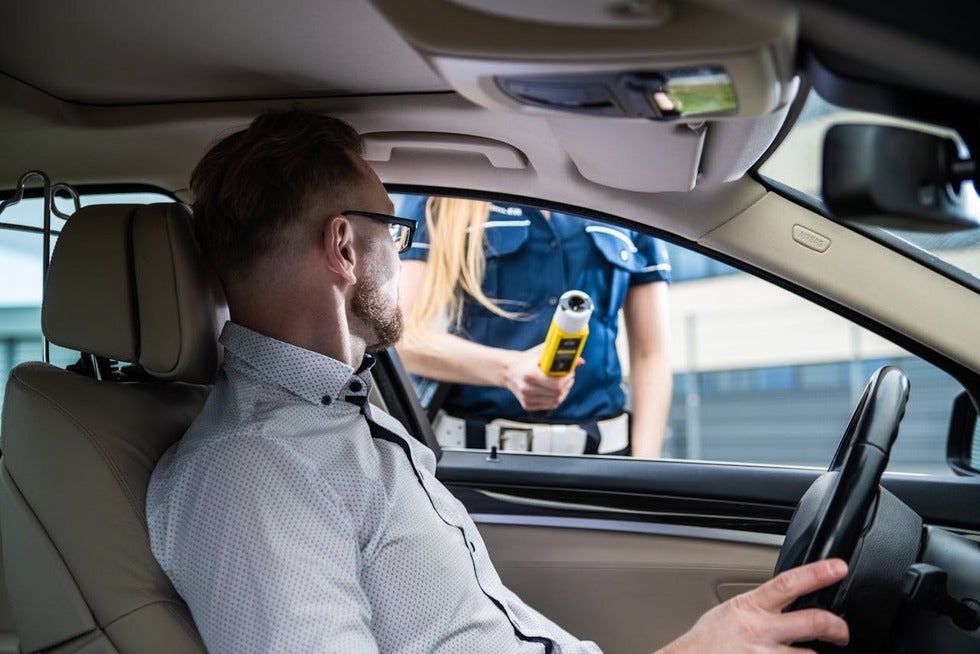
You might be asked to blow into a preliminary breath test device at the roadside. This is another request, not a command, for most adult drivers. You are allowed to say no to this roadside test, and officers shouldn't coerce you. They can penalize you for refusing, particularly if you are under 21 or on a prior DUI probation. In those situations, refusal can lead to fines or license suspension.
The outcomes of this examination aren't always precise; officers depend on them to determine if they have enough proof to arrest you. If you're arrested, you'll need to submit to a chemical test, typically a breathalyzer or blood test, at the station. It's a command, not a request. Denying it invokes severe penalties, such as the potential to lose your license and other penalties under California law.
Understanding when you can say no and when you must comply provides you with the assurance to weather a DUI stop and safeguard your rights.
When An Encounter Becomes An Arrest
What makes a DUI stop in California an encounter versus an arrest? Police have to follow strict rules when it comes to this under the Fourth Amendment, which protects you from unreasonable searches and seizures. Knowing when a stop becomes an arrest, your rights at every stage, and the significance of evidence are crucial if you want to defend yourself and make informed decisions.
|
Criteria |
Stop |
Arrest |
|
Basis |
Reasonable suspicion (e.g., traffic violation) |
Probable cause based on evidence |
|
Officer's Question |
Limited to identity and basic information |
Can involve more probing and accusatory queries |
|
Freedom to Leave |
You are generally free to leave or decline |
You are not free to leave; liberty is restrained |
|
Legal Standard |
Lower threshold |
Higher threshold, must be supported by facts |
You are not free to leave once an officer has informed you, by either words or conduct, that you are being detained and not permitted to leave. This can occur if the officer directs you to remain where you are, initiates a search of your person or vehicle, or cuffs you. For instance, if you're pulled over for not maintaining your lane, you could be asked for simple papers or to exit your vehicle. If the officer thinks, from what they see or smell—say, slurred speech or the smell of alcohol—that there is probable cause, the encounter can quickly escalate. Probable cause means the officer has facts, not suspicion, that you might be driving drunk.
Once you're arrested, your rights and legal options shift. You need to hear your Miranda rights before any questioning. From here, whatever you say can be used against you. The officer can demand that you take a chemical test because the law treats driving as a privilege, not a right. Refusing this test can result in automatic penalties, like license suspension and fines, even prior to you hitting the courtroom. If your BAC is at or above 0.08 percent, you have a strong legal presumption of impairment.
Miranda Rights
Miranda rights are the foundation of impartial police interrogation, especially during a DUI investigation. Once you're arrested under California DUI laws, officers must inform you that you have the right to remain silent and that anything you say can be used against you. If officers initiate questioning before reading these rights, your statements may be inadmissible in court. Generally, you should invoke your right to remain silent and request a DUI attorney. For those reading outside the US, this preserves your rights and avoids self-incrimination, a concept recognized in most judicial systems. If you're not informed of your Miranda rights, your statements can be contested and potentially suppressed.
Chemical Test Mandate
|
Action |
Consequence |
|
Agree to test |
Results used for or against you |
|
Refuse test |
License suspension (up to 1 year), fines, evidence of refusal used at trial |
|
BAC ≥ 0.08% |
Automatic presumption of impairment |
|
BAC .08% |
May still have impairment charges |
Chemical tests, such as breath or blood analysis, are utilized to capture your BAC. In California, what's called your ‘legal limit' for drunk driving is a 0.08% blood alcohol content or higher. If you decline the test, your license can be suspended immediately, and refusal is admissible as evidence in court. These test results are a key factor in a DUI charge. Even if your BAC is under 0.08%, you can still be charged if there's other proof of impairment.
The Psychology Of The Stop
A DUI stop in California isn't simply about blood alcohol concentration or test methodology; it also involves understanding California DUI laws and human psychology. The interaction between you and the arresting officer, along with your own attitude and the impact of recording, can significantly influence the outcome of your DUI investigation.
Officer Tactics
Officers can and do use techniques to steer your reactions during a stop. You might catch the officer's attitude. Some remain neutral, some attempt friendliness, and some play hard-nosed or aloof. Their manner of speaking can establish the tempo for the whole exchange.
Watch out for leading questions like, “You've had a drink tonight, haven't you?” Leading questions like that can put you on the spot to comply or justify. This is deliberate. Officers frequently employ these strategies to solicit confessions or evidence with no confrontation.
Intimidation is the other. Officers can stand near, speak loudly or sternly, or remind you of the law. This can increase your stress, increasing the chances you will say something self-incriminating or agree to tests you do not legally have to submit to. For instance, in California, you can decline field sobriety tests such as the walk-and-turn or one-leg stand without immediate consequences.
Keeping cool can assist. If you respond cordially and don't make any quick motions, the officer will often reciprocate, reducing the general tension. Keep in mind, probable cause is needed for additional searches or arrests, so your behavior and answers factor into what occurs next.
Your Demeanor
About The Psychology of the Stop. If you're respectful and calm, you minimize the risk of making the situation worse. Officers are trained to observe attitude and body language. Aggression or sarcasm can quickly turn their decision against you.
Not sounding confrontational is crucial. If you argue, yell, or swear, the officer could see that as a sign of being drunk or uncooperative, regardless of whether you're actually sober. Nerves are natural, but nervous fidgeting or evasive eye contact comes across as shady. Officers might use this as an opportunity to ask more questions or conduct tests.
If you're upfront and consistent, officers may be less inclined to hassle. Your demeanor can sway their attitude and how rigorously they enforce the process. When time is short, these little things make the difference: speak clearly and keep your hands in plain sight.
Recording The Interaction
Capturing the stop is a useful first move. This is why so many people opt to use their phones. It can offer a neutral record of what transpires. In Cali, you can record cops in public as long as you don't interfere.
Before you hit record, inform the officer of your actions. This openness can avoid confusion. Put your phone down and keep your hands where I can see them. Be discreet. If you go whipping out the camera all of a sudden or in an aggressive manner, that could take things to a whole other level.
Recordings are helpful, should your recounting of the stop be disputed at a later date. The video might reveal that you reacted peacefully or refused field sobriety tests legitimately. This proof is useful if you have to fight tickets or explain what went down during a stop.
Challenging An Unlawful Stop
Contesting an illegal stop is a crucial stage if you suspect your rights were infringed upon during a California DUI investigation. Knowing what you can do, why it matters, and how to use the California DUI laws to protect yourself helps you respond in a way that fits both your situation and your rights.
The law states that cops must have a valid reason to stop you, and there are particular methods to contest a stop if that reason is absent or flimsy. An officer must have reasonable suspicion before stopping your car. This means they require facts indicating that you violated a law, such as swerving or running a red light. If the stop is based on vague hunches or general area patrols, it may be deemed unlawful. The Fourth Amendment protects you from stops or searches that do not meet stringent requirements, which is crucial because any evidence collected following an unlawful stop can often be suppressed from your DUI case.
The law says cops must have a valid reason to stop you, and there are particular methods to contest a stop if that reason is absent or flimsy.
1. Know The Legal Grounds For Challenge
Video evidence from police dashcams, bodycams, or bystanders can be powerful in a DUI case. Pay close attention to the officer's behavior during the stop. Your challenge to an illegal stop includes analyzing how the officer questions you or searches your car, which can be reviewed for errors or abuses. If the officer fails to read your Miranda rights or pressures you for answers without cause, this can significantly back up your argument. Law enforcement officers must obey bright-line rules, and if they don't, their actions can be challenged in court.
2. Document The Details Of The Stop
One of the most powerful legal weapons available to you is the motion to suppress. This motion aims to suppress evidence at trial because it was obtained following an unlawful stop. If the judge is convinced, essential evidence such as breathalyzer results or statements can be excluded from your case. That step can make all the difference, sometimes resulting in charges being dropped. For instance, if your blood alcohol concentration test was conducted following an unlawful stop, your experienced DUI attorney can likely get that result tossed.
3. Use Video Evidence And Officer Actions
Working with a DUI attorney who knows California DUI law is essential. They can review police reports, verify the stop's circumstances, and determine whether you have a case for fighting the stop. A skilled attorney knows how to file the right motions, gather evidence, and present your case in court. They can outline your legal options and assist you in preventing errors that might damage your defense. Even if you believe the stop was unjust, having experienced legal advice can transform your assertion into a powerful legal case.
4. File A Motion To Suppress Evidence
Having a strong understanding of your rights during a DUI checkpoint can be the difference between a conviction and a dismissal. Remember that the legality of the stop hinges on the officer's adherence to established protocols, and any deviation could work in your favor.
5. Consult A Skilled DUI Defense Attorney
In summary, contesting an illegal stop requires careful documentation, a keen understanding of California DUI laws, and the support of a knowledgeable attorney. Protect your rights and ensure that you are not unfairly penalized for a traffic offense that might have been handled improperly.
Conclusion
During a DUI stop in California, there are straightforward regulations that you encounter. Police can request your name, license, and proof of insurance. You retain robust rights. Police have to honor those rights even as they seek out signs of DUI. You understand the difference between a request and an order. You see, when it changes from just asking questions to a detention or arrest. You don't have to wonder what your options are. You can fight an illegal stop. To stay safe, stay calm, and know what you can say or do. For more actionable steps and simplified guidance, explore additional guides or consult a reliable legal professional. Your rights count on every street.
Frequently Asked Questions
1. What Questions Can Police Legally Ask During A DUI Stop In California?
During a vehicle stop, cops can ask for your ID and require your license, registration, and proof of insurance. They may inquire about your recent activities and whether you have been drinking. After providing your paperwork, you have the right to remain silent.
2. Do You Have To Answer All Police Questions At A DUI Stop?
No, you just have to provide your basic ID and vehicle paperwork during a DUI checkpoint. You don't have to answer questions about where you were, what you were doing, or whether you had a drink.
3. Can You Refuse A Field Sobriety Test In California?
Yes, you can refuse a field sobriety test pre-arrest. However, refusing a chemical test, such as a breathalyzer, after a DUI arrest can result in penalties, including license suspension.
4. What Rights Protect You During A DUI Stop?
You don't have to talk to incriminate yourself during a DUI investigation. You have the right to refuse consent to search your car unless police have probable cause.
5. When Does A DUI Stop Becoming A DUI Arrest?
A DUI arrest occurs when police indicate you are under arrest or restrict your freedom to leave, requiring you to comply with lawful directions during the DUI investigation.
6. What Should You Do If You Believe The Stop Was Unlawful?
Note them, be calm, don't resist. Get an experienced DUI attorney immediately and fight the DUI arrest in court.
7. Can Police Search Your Car During A DUI Stop?
Police can only search your car if they have probable cause, your consent, or a legal basis like observing evidence in plain view. If there's no reason, you can politely decline the search during a DUI investigation.
Protect Your Future: Your Rights Matter After A DUI Arrest
A DUI arrest can turn your life upside down. Your license, your record, and your future are all on the line, and every decision you make from this moment forward matters. The legal system moves fast in these cases, and without the right defense, you risk serious penalties that can follow you for years.
At Gorelick Law, we understand how overwhelming this situation feels. Our team has spent decades defending people facing DUI charges and guiding clients through the confusion of DMV hearings, court deadlines, testing issues, and rights violations. We focus on protecting your freedom, challenging the evidence, and making sure law enforcement plays by the rules.
You don't have to navigate this alone. Visit Gorelick Law to learn how we can safeguard your rights and build a strong defense from day one. Call for a free consultation and get a dedicated advocate in your corner. Your future is worth protecting, and we're ready to fight for you.

