
Key Takeaways
-
Shield yourself by minding your mouth — don't make admissions, apologies, justifications, lies, or arguments during a DUI stop because these words can be turned against you and make your problem worse.
-
Remember to exercise your right to remain silent and your right to an attorney if you feel uncomfortable or unsure. This protects you from self-incrimination and ensures fair treatment.
-
Know that you can refuse pre-arrest sobriety and breath tests in California without almost any immediate legal consequences, but refusal post-arrest is a different matter and can still have serious administrative consequences, such as license suspension.
-
Be calm, be respectful, and do what the officer says. Your body language may be scrutinized and recorded as evidence.
-
Following a DUI stop, record every aspect of the encounter and consult an attorney as soon as possible to feel empowered and properly represented throughout any unfolding legal process.
-
Knowing your rights, the testing process, and what to do after the stop will help you survive a DUI stop better and reduce potential damage.
To find out what you should never say during a California DUI stop, concentrate on what can harm your rights or bolster the case against you. Anything that admits you drank or did drugs or rationalizes why you drove can be used in court. The law protects your right to remain silent beyond providing your name, insurance, and license. You don't have to answer questions about where you came from, how much you had, or if you feel okay to drive. Short, courteous responses do more for you than extended conversations or humor. In the follow-up, you get more on what to avoid and why it counts.
What You Should Never Say
What not to say during a DUI stop in California is crucial for your defense. Police are trained in careful listening, and flippant comments can be used against you in a DUI investigation. It's important to understand that your words may impact the outcome of your case, especially during a traffic stop. Consulting an experienced DUI defense attorney can help you navigate these challenging situations effectively.
-
Never offer up information on drinking or stops before the stop.
-
Do not answer incriminating questions regarding alcohol consumption.
-
Never lie about your identity or activities.
-
Avoid making any admissions about impairment or fault.
-
Do not consent to field sobriety tests unless required.
-
Always provide your legal documents when asked.
-
Remain calm; never argue or show aggression.
-
Use your right to silence to avoid self-incrimination.
1. Any Admission
Any admission of drinking — even if you think you're below the legal limit — can be used to construct a case against you in a California DUI stop. When an officer asks, ‘Have you had anything to drink tonight?' or, ‘How many have you had?' you may feel compelled to be honest, or you might minimize with, ‘I only had a couple of beers.' This is an absolute mistake. Such statements bolster the argument for impairment, providing law enforcement with a factual basis to intensify the DUI investigation. Never say anything to confirm their suspicions or imply you were DUI, as even ‘I'm just tired' can be interpreted as a cover-up for intoxication.
2. Any Apology
Never apologize or show remorse at a DUI stop. If you say, ‘I'm sorry' or ‘I shouldn't have driven,' that becomes an implied admission of guilt. Sorry words are too frequently read as an admission. Even a nice ‘Sorry for the inconvenience' might sound innocent, but it can be spun as if you knew your behavior was shady. Zip your lips; never talk about your decisions or regret your habit.
Others just want to apologize as a means of sympathy or to diffuse the conflict. This backfires. Officers are taught to record apologies and regrets as admissions of guilt.
3. Any Justification
DON'T tell me why you were drinking or why you thought you were able to drive. For instance, stating, “I just got off a long shift and needed a drink,” only gives the officer more ammunition to use against you during a California DUI stop. Excusing yourself, like, “I just live five minutes away,” or “I didn't think it would be an issue,” undermines your argument and invites more probing about your rationale. Remember, it's best to decline field sobriety tests and keep it elementary. Do not talk about your mentality or situation prior to the stop.
4. Any Lie
It's never a good idea to lie to the police during a California DUI stop. If you fib about your name, age, or other details, you jeopardize your legal issues. If you're caught lying about where you were or pretending you haven't had a drop to drink, it can really hurt your credibility in court, especially in DUI cases. Officers frequently observe discrepancies, which can be used by prosecutors to demonstrate that you are untrustworthy. You have to give your driver's license and insurance, but you don't have to answer drinking questions, as you can decline field sobriety tests.
5. Any Argument
During a California DUI stop, it's crucial not to argue or question the officer's authority. Such arguments can appear as evidence of madness or aggression, which can harm your case. Instead, remain calm, provide the necessary documents, and if needed, invoke your 5th Amendment right to remain silent regarding additional questions.
Your Fundamental Rights
During a California DUI stop, awareness of your basic rights, including your Fifth Amendment right, establishes the tone of your response. Your protections arise from constitutional amendments, primarily the Fourth, Fifth, and Sixth, which safeguard you against self-incrimination and illegal searches while providing for counsel. Knowing these rights and when to invoke them will allow you to navigate the DUI investigation with greater control and less danger.
The Right To Silence
Your right to silence under the Fifth Amendment is crucial during a California DUI stop. In other words, you don't have to answer questions that can be used against you in court. If an officer asks if you have been drinking or where you're coming from, it's your choice to answer or not. You can politely decline field sobriety tests. Saying, ‘I'm going to remain silent' or ‘I'm invoking my right to silence' is explicit and lawful.
Silence protects you from saying something stupid or something that might be misinterpreted or distorted. Even easy responses, such as ‘I had one drink,' can be utilized by law enforcement to construct a case against you. Your silence can't be used as evidence of guilt in court, so it's a shield, not a weapon against you. This approach can keep interactions clean, reducing the chances that you'll say something out of anxiety that makes things worse.
Though in California, you don't have to take field sobriety or PAS tests if you're 21 or older. Such tests at the roadside, when you refuse, don't trigger penalties, so you can refuse these tests without immediate legal impact. This is unlike other states, like New York, where post-arrest chemical test refusal can generate automatic penalties.
When you invoke this right, do it calmly and directly. Don't argue or try to explain yourself. The officer is obligated to honor your decision. This step prevents confusion and preserves your legal posture during a DUI investigation.
The Right To Counsel
You have the Sixth Amendment right to an attorney. If you feel coerced, perplexed, or simply uncertain as to what to say at a DUI stop, you can ask for a lawyer. State your request: “I want to speak to a lawyer before answering questions.” This guarantees no more interrogation until you have a lawyer.
A lawsuit attorney isn't simply a piece of bureaucracy—it is able to change the direction of your lawsuit. A good DUI defense lawyer will tell you how to respond (or not) and defend your interests from the get-go. This is critical if you're arrested or detained, because what you say after that can be damaging.
If at any time you sense the stop is creeping beyond mere questioning or you are being detained, invoke your right to legal representation. This right is yours regardless of whether you are a citizen, and exercising it demonstrates that you comprehend the gravity of the situation.
Your basic rights. Officers can't keep questioning you after you've requested an attorney. This protection is essential to your defense.
Navigating Sobriety Tests
How you navigate field sobriety tests during a DUI stop in California can significantly influence your case. The law presents options, including the right to decline field sobriety tests, but risks come with each choice. Sobriety tests aren't what they look like; officers might have you do a number of things, and anything you say or do will be recorded. Your words and actions serve as evidence, so it's essential that you know where you stand.
-
Field sobriety tests are not mandatory for most adults.
-
Poor performance can be used to support DUI charges.
-
Saying no to these tests doesn't bring about automatic criminal penalties.
-
Choosing to take or refuse a test can have serious repercussions.
-
Cool, courteous conduct safeguards your rights and circumvents bad presumptions.
Field Sobriety Tests
Field sobriety tests (FSTs) are designed to help law enforcement officers determine whether you're impaired during a California DUI stop. These tests usually consist of the walk-and-turn, standing on one leg, and the follow-the-pen test. It's important to note that if you're over 21 and not on DUI probation, you can actually decline field sobriety tests without penalty. Many people are unaware of this option, as officers might not inform you. Since FSTs are not scientific and rely on the officer's subjective evaluation, factors like anxiety, weather, and medical issues can significantly influence the results. For example, a person with a leg injury may struggle to balance, and language barriers might hinder understanding of the instructions. Even sober individuals can fail these tests if they are nervous or confused.
If you decide to take the tests and fail, the results can be used against you, even if you're not truly impaired. The police report will include the officer's observations regarding your balance, speech, and demeanor. Any aggressive or hostile behavior can be interpreted as a sign of intoxication. Therefore, it's wise to remain calm and exercise your Fifth Amendment right to remain silent, avoiding any self-incriminating statements. Politely refusing these tests is often the smartest choice to protect yourself, as refusal cannot be held against you in court, especially in DUI cases.
Preliminary Breath Test
The preliminary breath test (PBT) or preliminary alcohol screening (PAS) test is a tool that law enforcement officers utilize during a California DUI stop. If you're over 21 and not on DUI probation, you have the option to decline field sobriety tests at the roadside. While refusing the PBT does not carry immediate criminal consequences, it can lead to license suspension and other administrative sanctions if you're under 21 or on DUI probation.
Taking the PBT may not always be the best decision. It can serve as evidence in court and may not always be reliable due to calibration issues, user error, or medical conditions. By choosing to decline, you limit the evidence available to law enforcement for a DUI arrest, which is a crucial factor to consider. It may be wiser to refuse the roadside test and address any potential penalties later, especially if you suspect a false positive could arise.
California's Implied Consent
In California, simply having a license or following speed limits is insufficient; when you drive, you agree to comply with certain laws, including the state's implied consent law. This law means you consent by default to chemical testing, such as a breath or blood test, if you're arrested for DUI. This applies to all drivers, whether they hold a California license or an out-of-state one. Importantly, the implied consent duty arises only after a lawful DUI arrest, not during the initial traffic stop. It's crucial to understand that declining field sobriety tests can lead to severe penalties, including automatic license suspension and potential incarceration. Below is a summary of the key implications and consequences of implied consent laws.
|
Implication |
Consequence |
|
Driving in California |
You consent to post-arrest chemical testing |
|
Refusing a post-arrest breath or blood test |
License suspension, extra jail time, fines |
|
Applies to all drivers (in-state and out-of-state) |
No exemption based on license origin |
|
Only applies after lawful arrest |
Pre-arrest tests are voluntary |
|
Challenging arrest lawfulness |
May affect implied consent applicability |
|
Refusing a test complicates a DUI defense |
Harder to contest DUI charge, risk of extra penalties |
Pre-Arrest Tests
Before a DUI arrest, officers may request that you perform roadside tests such as portable breath tests or field sobriety tests. However, you do not have to consent to these tests, as California law allows you to decline field sobriety tests without facing immediate license suspension or criminal penalties for refusal alone. This rule applies to anyone pulled over during a California DUI stop, regardless of whether you are just passing through Ventura County.
While law enforcement can use your refusal to justify increased suspicion, it's important to remember that pre-arrest testing can sometimes help show cooperation. However, it can also provide police with crucial early evidence that could jeopardize your case. Although refusing to take these tests may limit the factual evidence against you, it can also prompt officers to look for other signs of intoxication, such as your demeanor or speech patterns.
Ultimately, deciding whether to take a pre-arrest test is a personal choice that depends on various factors, including your confidence in passing the test and your understanding of your limits. For many individuals, the best strategy is to politely refuse all roadside tests before an arrest, and consulting with an experienced DUI defense attorney can provide further guidance.
Post-Arrest Tests
Once you're arrested during a California DUI stop, the game changes significantly. You are now required by law to take a breath or blood test. Refusing this test can lead to license suspension by the Department of Motor Vehicles for up to a year for a first offense, and even longer for repeat offenses. The decision you make post-arrest carries immediate, severe legal consequences, including potential jail time and fines if convicted.
|
Type of Test |
When Required |
Penalties for Refusal |
|
Pre-arrest (roadside) |
Before arrest |
No immediate penalties |
|
Post-arrest (station/lab) |
After arrest |
License suspension, extra jail, fines |
Results from post-arrest chemical tests serve as powerful evidence in DUI cases. High blood alcohol concentration (BAC) readings can tip the scales towards a DUI conviction. However, the law allows you to request an independent blood test, which can be crucial if you wish to contest the results or the protocol of the official test.
If you think the arrest wasn't lawful or that procedures weren't followed, you can challenge the entire case. Sometimes, if the arrest is invalid, the implied consent law does not apply, providing you with a potential legal defense.
The Power Of Non-Verbal Cues
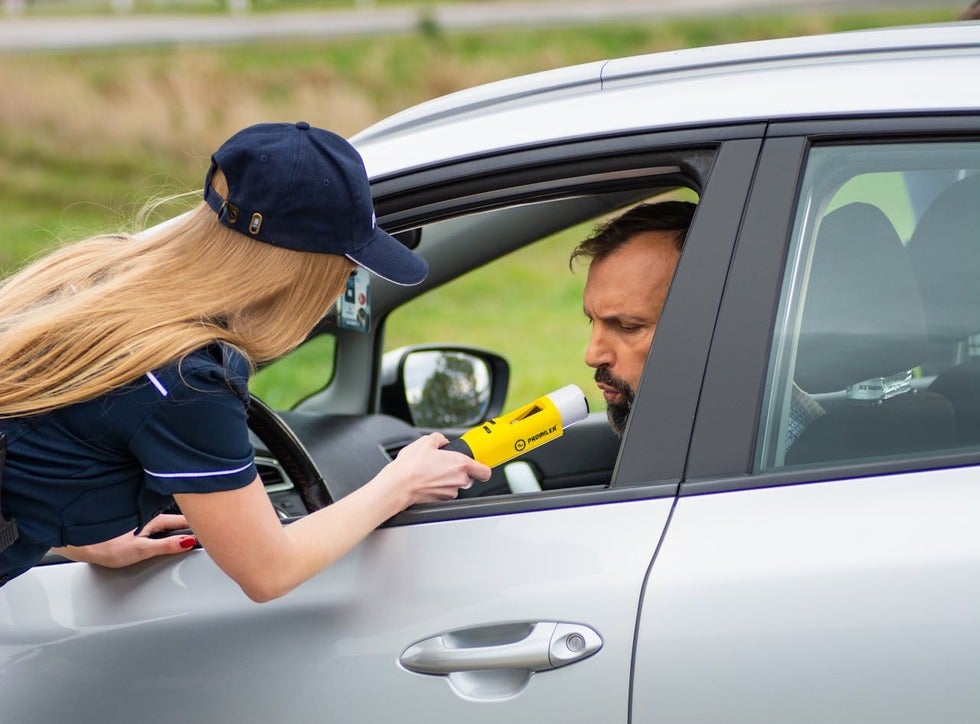
Non-verbal cues say a lot more than what you say at a California DUI stop. Your body language, facial expressions, and tone can reveal your feelings and intentions, often louder than words. Officers are trained to look for these cues during a DUI investigation, and they depend on them when determining if you're impaired. Staying conscious of how you present yourself can safeguard your interests during a stop, especially if you decide to decline field sobriety tests.
Your Demeanor
Your attitude during the initial DUI stop is what an officer sees first. By keeping calm and being respectful, you minimize the chances of being perceived as intoxicated or belligerent. A calm voice and poker face do wonders to level the tension. Little things, such as keeping your hands in full view and not fidgeting, prevent suspicion.
Nervousness or restlessness is frequently interpreted as guilt or intoxication. Fast breathing, shifting eyes, or stiff movements can all flag additional questioning or field sobriety tests. Officers are taught to look for indicators such as slurred speech, imbalance, or flushed skin. These can come off as signs of intoxication or substance use, even if you're just nervous.
Your posture shouts. If you cross your arms, don't make eye contact, or behave defensively, this is viewed as covering up something. Positive cues like nodding, brief eye contact, and answering in a calm voice can de-escalate the stop. A calm attitude helps the officer perceive you as compliant, not belligerent.
There are real consequences for a positive attitude. Officers frequently remark on your demeanor in their reports, which will be potentially viewed later in court. Cool, courteous behavior shines a light on you and can even convince an officer to just warn you instead of arresting you.
Your Actions
All your moves are watched and potentially logged for review during a California DUI stop. Little things like trying to pull something out of your bag too fast or flapping your hands can cause the officer to tense up. These motions can be interpreted as efforts to conceal or as a threat. Slow, deliberate movements relax both you and the officer, which is crucial in avoiding a DUI arrest.
Pay attention to all directions given by the law enforcement officers. If an officer requests your license, surrender it with no additional motion. This demonstrates you are submissive and transparent. Don't shout, argue, or debate on the roadside. If you don't follow a request, inquire about it in a firm tone. This shows that you are present, not avoiding the situation.
Your behavior could end up on the record and in court, especially if you can't follow instructions during field sobriety tests, such as walking a straight line. These actions can be used as evidence of impairment in DUI cases. Often, the officer's written or video-recorded statement of your behavior is crucial for the prosecution.
Field sobriety tests are based on your non-verbal cues. Officers watch for hesitation, imbalance, or confusion during these drills. Even choosing to keep your mouth shut is a non-verbal cue, and sometimes it's smart to nicely say you're taking the Fifth Amendment right. Your cooperation and responsiveness are vital in determining whether the officers need to cuff you or wave you through with a warning.
What To Do Immediately After
What to Do Immediately: After keeping your cool, safeguarding your rights, and collecting evidence. Everything you do should assist you if the matter goes to a legal phase.
-
Stay calm and polite throughout, even if it feels tense or unfair. The officer's observations and your demeanor can be used as evidence, so it is best to remain neutral and respectful. Don't yell or threaten. Belligerence gets taped too and will be held against you, as it can be interpreted as evidence of intoxication.
-
NICOLE/Just nicely pleaded the Fifth. Don't respond to questions about whether you've been drinking or where you were coming from. You do need to present your driver's license and insurance information, but you refuse to give any additional information. If requested to do field sobriety tests, keep in mind these are voluntary in California, and you can decline without immediate consequence. Politely but resolutely say, “I don't answer questions or take tests.
-
If an officer asks you for a roadside breath test, you can say no, but that may lead to a one-year license suspension by the DMV. Understand the distinction between preliminary alcohol screening (PAS) devices and post-arrest chemical tests. Refusing the latter post-arrest can result in additional legal penalties.
-
Begin cleaning up your thoughts and actions as soon as they stop. As soon as possible, write down everything you recall — exact times, locations, the order of events, and the officer's demeanor. These specifics might slip away, but they are essential in constructing a shield.
Document Everything
Documentation is your best friend. Record exactly what occurred prior to, during, and after the stop. Note the time, location, and what triggered the stop. Record details such as the officer's name, badge number, and any statements.
If there were bystanders or passengers, get them to document what they witnessed. Their notes can be a useful resource if you're fuzzy on the details or need to fact-check. Photos or video, if you have them, can provide context, whether it be the venue, lighting, or conditions.
File these notes in a secure, convenient location, be it a digital directory or physical notebook. Have them prepared for your lawyer, as good documentation will allow your attorney to build a solid defense.
Seek Legal Advice
Call a good DUI lawyer right away. The law is tricky, and early expert guidance can help. A good attorney will tell you what you are facing, potential penalties, and your defenses, given the facts you relay.
Tell your lawyer everything, even the little things. Inquire about what to do next and how to deal with any police or DMV questions. Good legal representation leads you through statements, hearings, and any negotiations that arise.
For every legal step, prepare by getting your facts in order. In advance, go over your notes on a regular basis with your legal counsel. Keep your nose to it and be involved. Your case's outcome is often a matter of your attention and initiative.
Conclusion
To survive a DUI stop in California, you need clear thinking and a calm voice. Words can craft what transpires next, so be thoughtful in their selection. Talk too much, and you could damage your case. Give away too little, and you'll come across as difficult. Officers observe your movement and hear every word. Your rights are there, but you need to know them. Every action you take after that stops and molds your future course. Contact an attorney who understands the local laws and can advise you on what to do next. Keep out, keep wise, and give yourself the best chance at a just process. If you want to learn more, check our blog for updates and tips.
Frequently Asked Questions
1. What Should You Never Say During A DUI Stop In California?
NEVER admit to drinking or using alcohol, especially during a California DUI stop. Most importantly, don't make excuses or volunteer information, as everything you say can be used against you in court.
2. Do You Have To Answer All Questions From The Police?
No, you don't have to answer everything during a California DUI stop. You can nicely state you would like to invoke your 5th Amendment right to remain silent or talk to an experienced DUI defense attorney first.
3. Can You Refuse Sobriety Tests During A DUI Stop?
During a DUI stop in California, it's crucial to understand that under California's implied consent law, you can decline field sobriety tests, but refusing a chemical test after arrest may lead to sanctions.
4. What Are Your Fundamental Rights At A DUI Stop?
You have the right to an experienced DUI defense attorney and the right to remain silent, which are crucial during a DUI investigation.
5. How Important Are Non-Verbal Cues During A DUI Stop?
Body language counts during a California DUI stop. Be calm, keep your hands visible, and avoid sudden movements.
6. What Should You Do Immediately After A DUI Stop?
Write down all you recall about the DUI arrest, including the officer's behavior and your answers. Call an experienced DUI defense attorney immediately for legal counsel.
7. Will Refusing A Breathalyzer Hurt Your Case In California?
Refusing a portable breathalyzer test after a DUI arrest can prompt an automatic license suspension and additional penalties, even if you're not convicted.
Protect Your Future: Your Rights Matter After A DUI Arrest
A DUI arrest can turn your life upside down. Your license, your record, and your future are all on the line, and every decision you make from this moment forward matters. The legal system moves fast in these cases, and without the right defense, you risk serious penalties that can follow you for years.
At Gorelick Law, we understand how overwhelming this situation feels. Our team has spent decades defending people facing DUI charges and guiding clients through the confusion of DMV hearings, court deadlines, testing issues, and rights violations. We focus on protecting your freedom, challenging the evidence, and making sure law enforcement plays by the rules.
You don't have to navigate this alone. Visit Gorelick Law to learn how we can safeguard your rights and build a strong defense from day one. Call for a free consultation and get a dedicated advocate in your corner. Your future is worth protecting, and we're ready to fight for you.

