
Key Takeaways
-
Here's what you need to do during a California DUI traffic stop to safeguard your rights.
-
You have the right to keep quiet, decline field sobriety tests, and ask for a lawyer. Exercising them can help limit self-incrimination and strengthen your defense if necessary.
-
If you're requested to submit to a chemical test post-arrest, know that if you refuse, it can result in an immediate license suspension and more under California's implied consent law.
-
Always record what happens during your stop and arrest. Detailed logging and recording can be key evidence.
-
Know your rights: If the police are conducting an unlawful stop, an illegal search, or using coercive tactics, talk to your lawyer about fighting back against improper procedures.
-
Hiring seasoned counsel and showing up to every hearing is key to defending your rights, fighting charges, and minimizing the lasting effects on your future.
You do have explicit legal rights in a DUI traffic stop in California. You can remain silent and refuse to answer questions about where you came from or whether you had a drink. Have your license, registration, and proof of insurance available if requested. Police can request you exit your vehicle. You do not have to do field sobriety tests or answer questions about drinking. You can refuse a roadside breath test if you are not under 21 or on probation, but refusing a chemical test after arrest can cause license loss. Understanding these rights will help you protect yourself and remain calm. The next section will highlight important actions and information to navigate you through every phase of a stop.
The Initial Traffic Stop
You've got to know your legal rights and act to protect them. Police can pull you over if they observe driving that appears dangerous, such as swerving, sudden braking, or running a stop sign. Sometimes, they stop you for run-of-the-mill traffic offenses, like speeding, burned-out lights, or blowing a red light. Both can result in a DUI investigation if officers smell impairment. The Fourth Amendment protects you from unreasonable search and seizure, and the Fifth Amendment protects your right to remain silent. Officers may tell you to step out of your vehicle if they suspect a DUI or infraction occurred. They don't have to give you a Miranda warning during the stop, and they don't have to read you your right to silence. Being aware of this keeps you from doing things that will harm your case down the road.
Pulling Over
-
Turn on your blinker as early as possible when you see the patrol car's lights or hear the siren.
-
Reduce speed immediately and pull to the shoulder.
-
Select a location that is best lit, if possible, like a street lamp or open store. This makes the stop safer for both you and the officer.
-
Don't stop on a curve, busy intersection, or narrow shoulder if possible. Stop so that the officer can access your car without having to step into traffic.
-
Park your car, switch the engine off, and keep your hands right where I can see them on the wheel.
-
Wait until the officer comes to you before grabbing anything from the glove box or your bag.
Initial Interaction
When the officer approaches your window, it's important to remain calm and courteous. Greet the officer politely and refrain from exiting the vehicle unless instructed. The officer will explain the reason for the traffic stop. If they ask questions, respond briefly and clearly, providing only the necessary information, such as your name. Avoid mentioning drinking or your whereabouts. Remember that your Fifth Amendment right to remain silent is always applicable, even if the officer doesn't remind you of it. While you must comply if asked to exit the car, you are not obligated to answer all their questions. If they propose administering a field sobriety test, you can politely decline, asserting that these tests are not mandated by law and can be subjective. Additionally, be mindful of potential witnesses nearby; a crowded street or security camera may support your case if the situation escalates during a DUI charge.
Providing Documents
Checklist For Documents:
-
Valid driver's license: Shows you are allowed to drive.
-
Vehicle registration proves you have the right to use the car.
-
Proof of insurance: Confirms you meet state insurance rules.
Prior to any movement, inform the officer of the location of your documents and that you are retrieving them. This maintains safety and prevents jerky gestures that might alarm the officer. Just keep your paperwork current, since expired or missing papers can attract additional issues. When you give your papers, don't argue about the stop. Set aside your worries until after. Keep in mind you might be requested to undergo a roadside breath test. If you blow over 0.08 percent, the officer can arrest you. Once arrested, you have ten days to request a DMV hearing, but you're on your own on this. A public defender can't assist with the DMV.
Your Core Rights During A DUI Stop
Your core rights during a DUI stop in California are governed by a combination of constitutional protections and state law, including California DUI laws. Knowledge is power when it comes to protecting yourself from DUI charges, as even minor blunders can be costly. Each right plays a specific role, from avoiding self-incrimination to receiving impartial treatment.
1. The Right To Silence
You never have to answer questions about drinking or your whereabouts prior to the traffic stop. You can remain silent under the Fifth Amendment and politely state to the police that you are invoking your right to remain silent. This isn't an admission of guilt; it's a right that can be crucial during a DUI case. In criminal court, they cannot use your silence against you. It's clever to say, ‘I'm invoking my Fifth' if you feel compelled to respond, especially since the Supreme Court states that cops don't have to issue the Miranda warning at a DUI stop.
2. Refusing Field Sobriety Tests
You can refuse field sobriety tests, such as walking in a straight line or standing on one leg, especially during a DUI stop in Ventura County. California will not penalize you merely for refusing these tests, which can be a strategic move in your DUI case. Police could arrest you if they believe you're impaired based on their observations or smell. The whole reason for refusal is to avoid giving more evidence against yourself; these tests aren't necessarily fair or accurate. Keep in mind that cops can order you out of the car if they reasonably believe you committed an infraction.
3. Limiting Self-Incrimination
Never discuss your consumption, timing, or activities prior to being pulled over during a traffic stop. Even stating, "I just had one glass," can be used in court as evidence. Quietly say that you do not want to answer questions that might incriminate you, as this can be crucial for your dui defense lawyer later. Remain courteous, steer clear of arguments, and keep your responses brief if you speak at all.
4. The Right To Record
You can record your encounter during a traffic stop if it is safe and legal. Inform the arresting officer that you are filming for accountability. Keeping your device visible is crucial; don't conceal it. This taping can document what was said and done, potentially serving as proof in court for your DUI case and clarifying the realities of the encounter.
5. Requesting An Attorney
You can request a DUI defense lawyer at any point, particularly post-arrest. Just say, ‘I want to speak to an attorney.' Once you ask, stop answering questions until your skilled Los Angeles DUI lawyer is present. This right is essential to defending yourself against DUI charges. Your lawyer's legal advice is the best thing you can do to preserve your liberty.
Understanding Chemical Tests
These chemical tests are the heart of DUI investigations in California. These tests determine how much alcohol or drugs are in your body, which will directly impact your legal fate. Being familiar with your rights and the tests can inform your decisions and defense if you ever get pulled over for a DUI.
Key Chemical Test Points:
-
Pre-arrest breath tests and post-arrest chemical tests are not the same thing.
-
Automatic license suspension for refusing a chemical test!
-
For officers to make a stop, they must have reasonable suspicion.
-
Chemical test results can determine DUI and administrative penalties.
-
Special laws apply to drivers who are 21 and under and those who are on DUI probation.
-
You're entitled to breath or blood tests.
Implied Consent Law
When you drive in California, you've implied your consent to chemical testing if cops arrest you for a DUI charge. This means that your act of driving serves as sufficient assent, without the need for a signed contract. If you decline a chemical test post-arrest, the state can suspend your driving privilege for a minimum of a year, regardless of whether you're convicted of a DUI offense. The charges can escalate with every refusal or prior DUI. Law enforcement officers can obtain a warrant to force a blood draw if you don't consent. In essence, implied consent laws aim to deter drunk driving by making refusal costly and burdensome, emphasizing the importance of public safety.
Pre-Arrest Breath Test
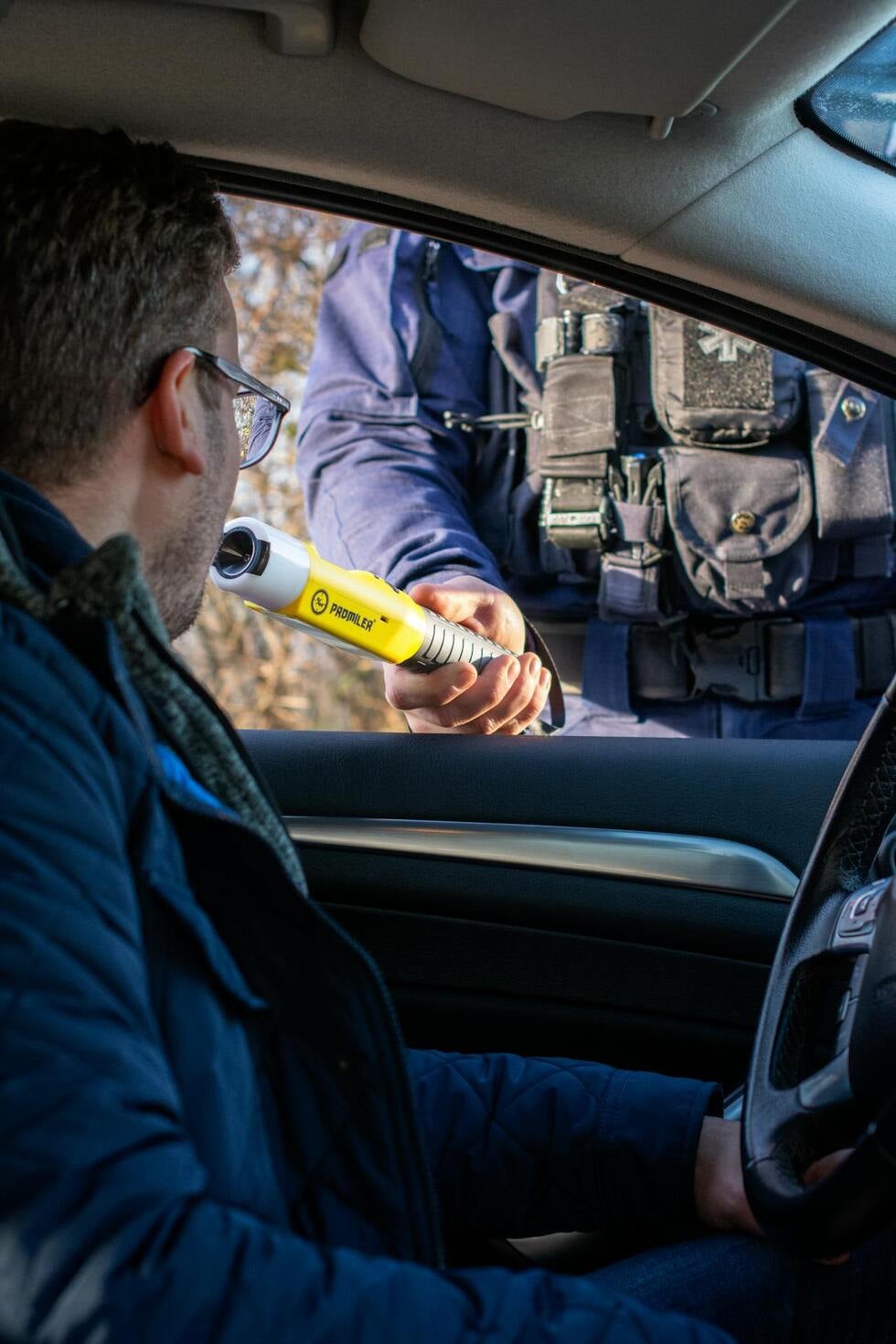
Officers will have you take a preliminary alcohol screening (PAS) test prior to arrest, which is often utilized during traffic stops. This portable breathalyzer is commonly paired with field sobriety tests, such as walking a line or standing on one leg, to assess drunk driving. If you're over 21 and not on DUI probation, you can politely decline the PAS. However, refusal could still lead the officer to rely more on their observations, potentially resulting in a DUI charge. For drivers under 21 or on DUI probation, taking the PAS is mandatory, as refusal can lead to a criminal charge or probation violation. While PAS outcomes are not admissible in court, they can still impact the officer's decision to make an arrest.
Post-Arrest Chemical Test
Once arrested for a DUI charge, you must submit to a chemical test—breath or blood—to determine your BAC. In California, the legal limit for most drivers is 0.08%. This is crucial in court and during DMV hearings, as it can determine whether you face a DUI offense or lose your driving privilege. If you suspect the initial field sobriety test results are inaccurate, you can request an additional one, which may bolster your legal defense. Refusing at this stage leads to additional penalties, such as extended license suspensions and harsher consequences in criminal court. Additionally, as time passes, your BAC may decrease, potentially impacting your DUI case.
Refusal Consequences
Refusing a chemical test can lead to an automatic one-year license suspension under California DUI laws, even without a DUI charge. Courts often interpret this refusal as an indication of guilt, complicating your DUI defense. If you decline a second time, the penalties escalate, resulting in longer suspensions or additional DUI offenses. However, you can contest these sanctions in criminal court or at a DMV hearing, typically by showing that the arresting officer did not follow proper protocol or lacked reasonable suspicion. Understanding your rights and the consequences of denial can guide you to make wiser decisions in stressful situations.
Unlawful Police Conduct
What are your rights during a DUI traffic stop in California? Knowing how to identify illegal police behavior and your options is crucial when faced with a DUI charge. An unlawful stop or search can lead to evidence being tossed, potentially resulting in a dismissal of DUI offenses. Recording the interaction, understanding your recording rights, and collaborating with an experienced DUI defense lawyer are essential if you believe your rights have been violated.
Illegal Stop
In California, law enforcement must have a clear, reasonable suspicion of a law violation before they can initiate a traffic stop. This requirement means they must cite concrete facts rather than rely on gut feelings or stereotypes. If you were stopped while obeying all traffic laws, this could be considered an unlawful stop. Any evidence obtained during such a stop, including breath test results or statements made, may be deemed inadmissible in court, which could significantly impact your DUI case.
You have the right to contest the validity of the stop as part of your DUI defense. This often involves challenging the arresting officer's justification and whether it meets the legal standard of reasonable suspicion. It's crucial to document all details you can remember about the stop, including the location, time, and the officer's name. You can also record the encounter, asserting your rights by stating, “I have a First Amendment right to take photos and video.”
If you believe you were subjected to unlawful police conduct, make sure to inform your DUI defense lawyer. They can file suppression motions, and if successful, this may reduce or eliminate the DUI charges against you, protecting your driving privilege and future.
Unlawful Search
During a DUI stop, law enforcement officers cannot search your car without probable cause or your consent. Probable cause may arise from the smell of alcohol or visible contraband, but it cannot solely rely on suspicion. If an officer requests a search and you believe there is no reasonable cause, you can assert your rights by politely declining the request. Remember, anything discovered during an illegal search may be suppressed, significantly affecting the prosecution of your DUI case.
If you suspect your rights were violated during the stop, it is crucial to inform your DUI defense lawyer and consider filing a complaint with the local oversight body, such as the Police Oversight Commission. You can use online intake forms for reporting misconduct, ensuring that your concerns are addressed appropriately and that your legal defense is strengthened against any potential DUI charge.
Coercive Tactics
Coercive tactics encompass threats, intimidation, or pressure to persuade you to agree to a search or to respond. For instance, an officer could demand that you cooperate or intimidate you; that's not the case. You cannot be forced to answer questions regarding your birthplace, immigration status, or how you came into the country. Never be coerced into waiving this right.
If you're being pressured, record the officer's behavior and statements. Write down specifics or tape the encounter if you are able to do so safely. This record can prove crucial to your attorney when contesting the wrongfulness of the arrest. The courts can exclude evidence or dismiss charges if they determine that officers used coercion to gain compliance.
Navigating A DUI Arrest
Just knowing your rights and what happens after a DUI arrest in California can reduce confusion and help you make confident decisions. A DUI stop is nerve-racking, especially when facing potential California DUI penalties. Understanding what to anticipate and how the proceedings go can get you into a better position. For each core stage, below we break down what you should do, what rights you have, and how best to protect yourself as you proceed through the legal process.
The Arrest Process
The arrest procedure for suspected DUI in California is systematic. Once you're stopped during a traffic stop, remaining calm can prevent the situation from escalating further. Law enforcement officers will be looking for signs of impairment, such as erratic driving or the odor of alcohol. They need reasonable suspicion to pull you over, adhering to Fourth Amendment rights, which require appropriate legal authorization for searches.
Field sobriety tests, like walking in a straight line or following a pen with your eyes, are voluntary, and you can refuse them without direct legal consequences. However, if the officer decides to arrest you, California's implied consent law mandates that you take a chemical test of your breath or blood. Refusing this test can lead to automatic license suspension and severe penalties if you are found guilty of a DUI charge.
After your arrest, you will likely be cuffed and taken to the station. It's crucial to understand the charges against you, especially if facing DUI offenses. From this point, officers must operate within the law, providing Miranda warnings before any custodial interrogation. Remaining calm and compliant can prevent additional charges and ultimately assist your DUI defense lawyer in building your case.
DMV Hearing
Once arrested, you are up against more than just criminal charges. The California DMV will begin administrative action against your license. You are entitled to a hearing to challenge this action. However, you must demand one within 10 days after your arrest. This hearing is not a criminal trial; it is only about your driving privileges.
At the DMV hearing, you can present evidence and call witnesses, popular ones who saw the stop. This is an opportunity to dispute the officer's cause for the stop or the chemical test. If you win, you could keep your license. If you don't request this hearing, your license is typically suspended by default.
Criminal Charges
Below is a summary of potential DUI charges and penalties in California:
|
Charge |
Penalties (first offense) |
|
Misdemeanor DUI |
Fine (USD 390–1000), 48h–6mo jail, license suspension up to 6 months |
|
Felony DUI (injury or prior) |
Fine ranging from USD 1,015 to 5,000, a prison sentence of 16 months to 3 years, and a license suspension of up to 5 years. |
|
Chemical Test Refusal |
One-year license suspension, stiffer penalties |
Penalties vary based on your record. Second and third offenses carry longer suspensions, bigger fines, and more jail time. For instance, a second conviction can result in up to two years of license loss and compulsory jail. If someone is injured in the accident, charges turn into felonies with much more severe penalties.
As with anything, having a good lawyer is essential. They know how to fight for you against improper police procedure, negotiate for reduced charges, and generally help you navigate this complex system. Without legal assistance, you could be facing severe penalties and lasting effects on your career and relationships.
Protecting Your Future
Understanding your legal rights during a DUI traffic stop in California is crucial, as it can significantly impact your future. Every action taken from the initial vehicle stop affects your DUI case and criminal record. The repercussions of a DUI conviction, including license suspensions and increased insurance rates, can last for years. By being proactive and seeking legal advice from an experienced DUI defense lawyer, you can protect your interests and prevent further damage to your future.
Document Everything
Documenting what happened is one of the best things you can do to protect your future after a DUI charge. As quickly as possible, record everything you recall—date, time, location, and what precipitated the stop. Provide information about the officer's demeanor and their justification for pulling you over. This degree of detail can highlight discrepancies or mistakes that can work to your advantage, particularly in the context of California DUI laws.
If you had people with you during the stop or arrest, have them write their own statements. Witnesses can corroborate your account of what happened, which makes your defense more credible. Even minor details like road or weather conditions could be relevant.
Collect all paperwork you are given from law enforcement and the court—citations, test results, DMV notices. Store these papers well. You have only ten days from your arrest to request a DMV hearing to contest a license suspension, so quick and meticulous record-keeping is crucial.
Your notes and records become the basis for your defense. If it feels like something is off about how the stop was conducted, this information can assist in shaking up the state's narrative in criminal court.
Avoid Common Mistakes
-
Admitting guilt or apologizing to law enforcement
-
Refusing to provide identification or required documents
-
Not recording the details of the stop and arrest.
-
Neglecting to request a DMV hearing within 10 days
-
Not consulting with an attorney as soon as possible
Don't discuss your case with anyone — not anyone — other than your lawyer. Disclosure, even to friends or family, can boomerang. The sole secure location to talk about specifics is with your lawyer.
Missing court dates or deadlines can be devastating. Courts aren't very understanding of excuses for not appearing. Watch for all notices and directions.
Never talk about your case on social media or publicly. They can use anything you say against you and tear down your defense.
Seek Legal Counsel
Locating a skilled DUI defense attorney will be your initial concern. A professional will know how to check police reports, question field sobriety tests, and work with tricky processes.
Discuss all facets of your case with your attorney. Provide them with all documents, notes, and witness information you've assembled. A full profile aids in crafting a strong defense plan.
Listen to your attorney's advice every step of the way, from court hearings to negotiations. Your attorney will help you understand your rights, when to talk and when to clam up, and what the chances are of a plea bargain or fighting the charges.
A seasoned criminal defense lawyer can be the difference between a conviction and a better result. California drivers deserve someone who will fight for their future, scrutinizing every fine print and safeguarding their interests.
Conclusion
You have rights that count at every DUI stop in California. You can remain silent, you can demand a lawyer, and you can refuse illegal searches. Police have rules as well. They have to treat you fairly and by the law at every step. If police break the rules, you can fight back with the facts. They miss crucial steps that keep them safe, like asking if you're free to go or when to take a test. To protect your tomorrow, know your rights and exercise them if necessary. For more tips or to share your story, visit our resources or connect.
Frequently Asked Questions
1. What Should You Do When Stopped By Police For Suspected DUI In California?
Remain cooperative and remain calm. Your right to silence. Give only your license, registration, and proof of insurance when requested.
2. Can You Refuse A Roadside Sobriety Test In California?
Yes, you can refuse field sobriety tests. Refusing a chemical test after arrest can lead to penalties, such as license suspension.
3. Do You Have To Answer All Police Questions During A DUI Stop?
No, you don't have to answer questions beyond providing your ID information. Politely inform law enforcement officers that you wish to exercise your Fifth Amendment rights.
4. What Are Your Rights Regarding Chemical Breath Or Blood Tests?
Once arrested for a DUI charge, you must take a chemical test; refusing can lead to license suspension and other legal consequences.
5. How Can You Identify Unlawful Police Conduct During A DUI Stop?
Illegal activities, such as a traffic stop without probable cause or an unlawful search of your vehicle, can be challenged in criminal court, especially regarding DUI charges.
6. What Should You Do If Arrested For DUI In California?
Remain silent and ask for a skilled DUI defense lawyer now. Don't resist arrest; this will only exacerbate your DUI case.
7. How Can You Protect Your Future After A DUI Arrest?
Get a specialized DUI defense lawyer immediately. They will defend your rights, guide you through the DUI process, and work to mitigate California DUI penalties.
Protect Your Future: Your Rights Matter After A DUI Arrest
A DUI arrest can turn your life upside down. Your license, your record, and your future are all on the line, and every decision you make from this moment forward matters. The legal system moves fast in these cases, and without the right defense, you risk serious penalties that can follow you for years.
At Gorelick Law, we understand how overwhelming this situation feels. Our team has spent decades defending people facing DUI charges and guiding clients through the confusion of DMV hearings, court deadlines, testing issues, and rights violations. We focus on protecting your freedom, challenging the evidence, and making sure law enforcement plays by the rules.
You don't have to navigate this alone. Visit Gorelick Law to learn how we can safeguard your rights and build a strong defense from day one. Call for a free consultation and get a dedicated advocate in your corner. Your future is worth protecting, and we're ready to fight for you.

